The best educational flash cards match a child’s current learning goal, whether that is letter recognition, math fluency, bilingual vocabulary, or emotional awareness. Compare hands-on cards, guided games, and talking readers by age, subject, and how much independent practice a child can manage.
Quick Top Products
Educational Insights Hot Dots Phonics Fun
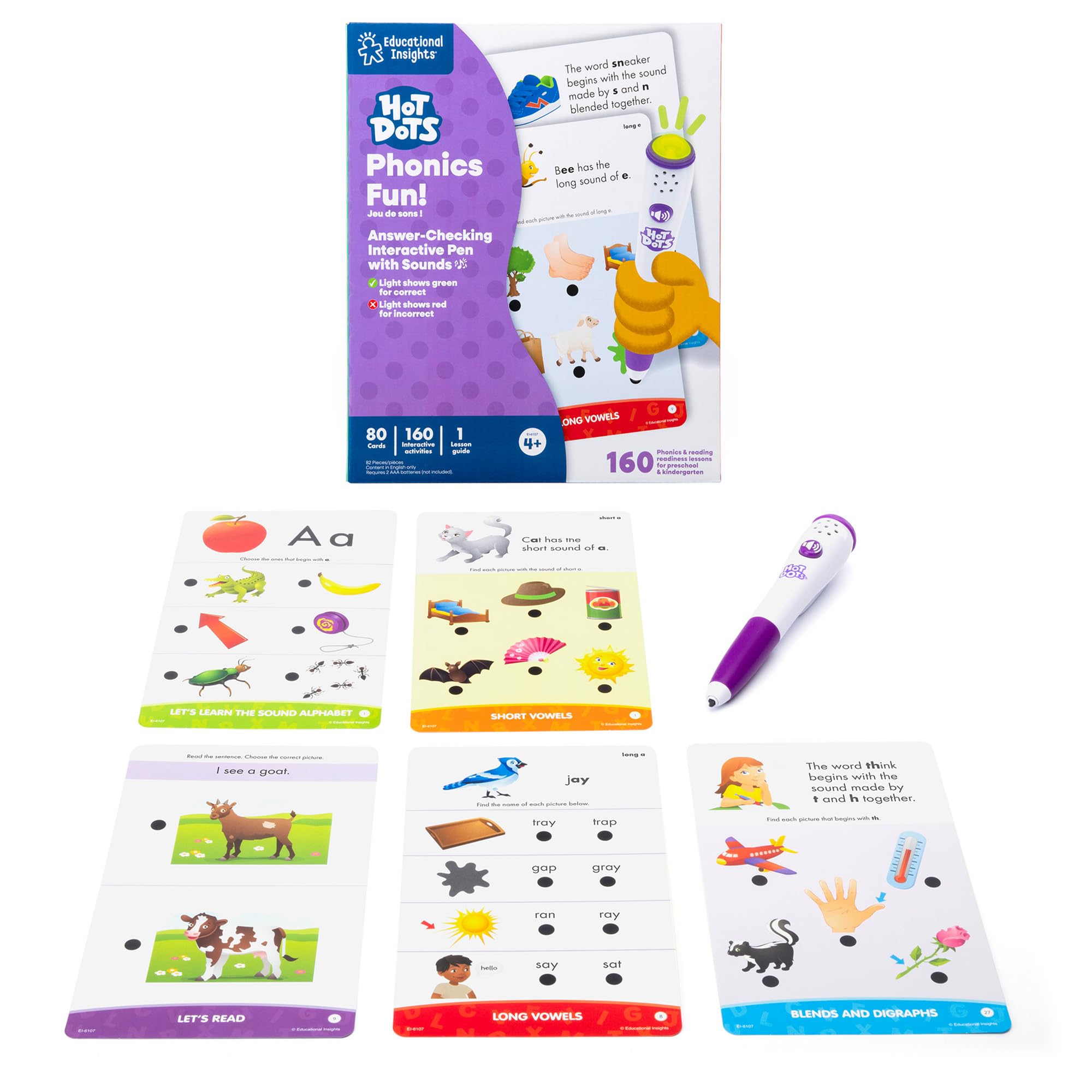
- Includes 80 double-sided cards for 160 activities.
- Covers letter sounds, vowels, blends, digraphs, and sight words.
- The pen provides visual and audio answer feedback, with a mute option.
Best For: Preschool and kindergarten learners practicing letter sounds, blends, and sight words.

hand2mind Alphabet Picture Mnemonic Cards
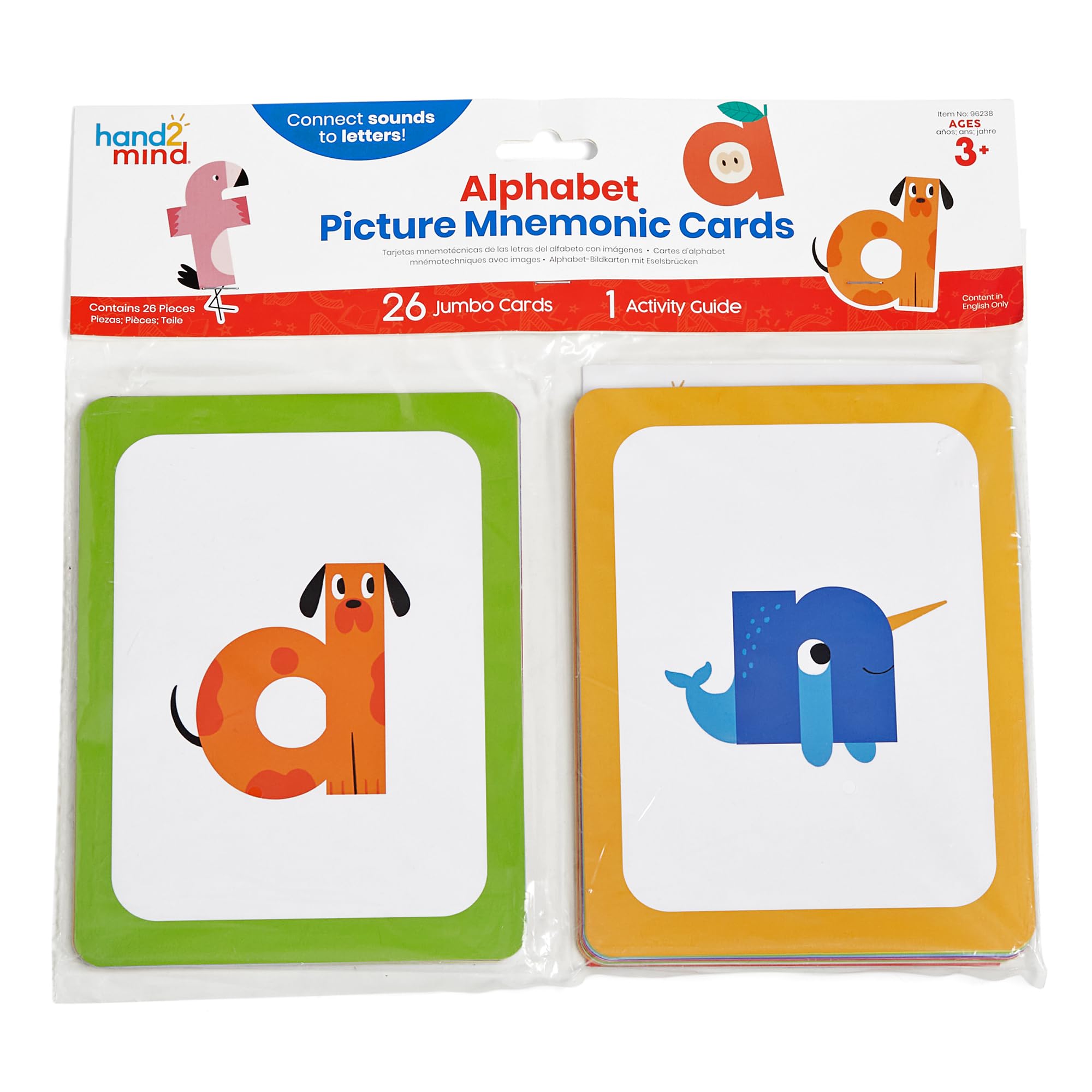
- Includes 26 double-sided alphabet cards and an activity guide.
- Embedded pictures connect lowercase letter shapes with sounds.
- Jumbo cards measure 6 by 8 inches.
Best For: Young learners and classroom groups connecting letter shapes with sounds and images.
Learning Resources Sight Word Stomp!
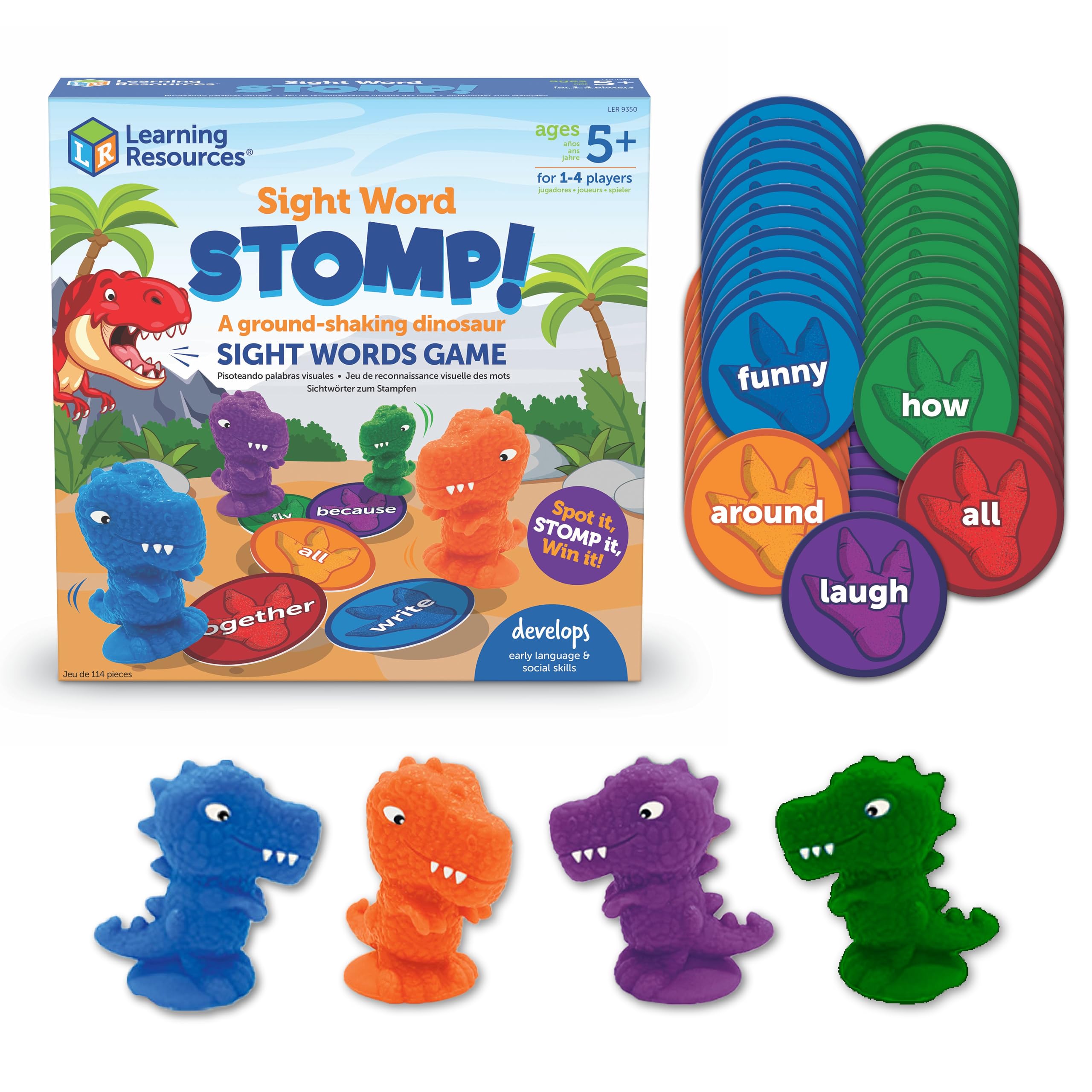
- Includes 110 double-sided cards with 220 sight words.
- Four dinosaur stompers attach to word cards with suction cups.
- Words are color-coded from Pre-Primer through Third Grade.
Best For: Children from preschool through early elementary who enjoy active word games.
Educational Insights Hot Dots Numbers & Counting
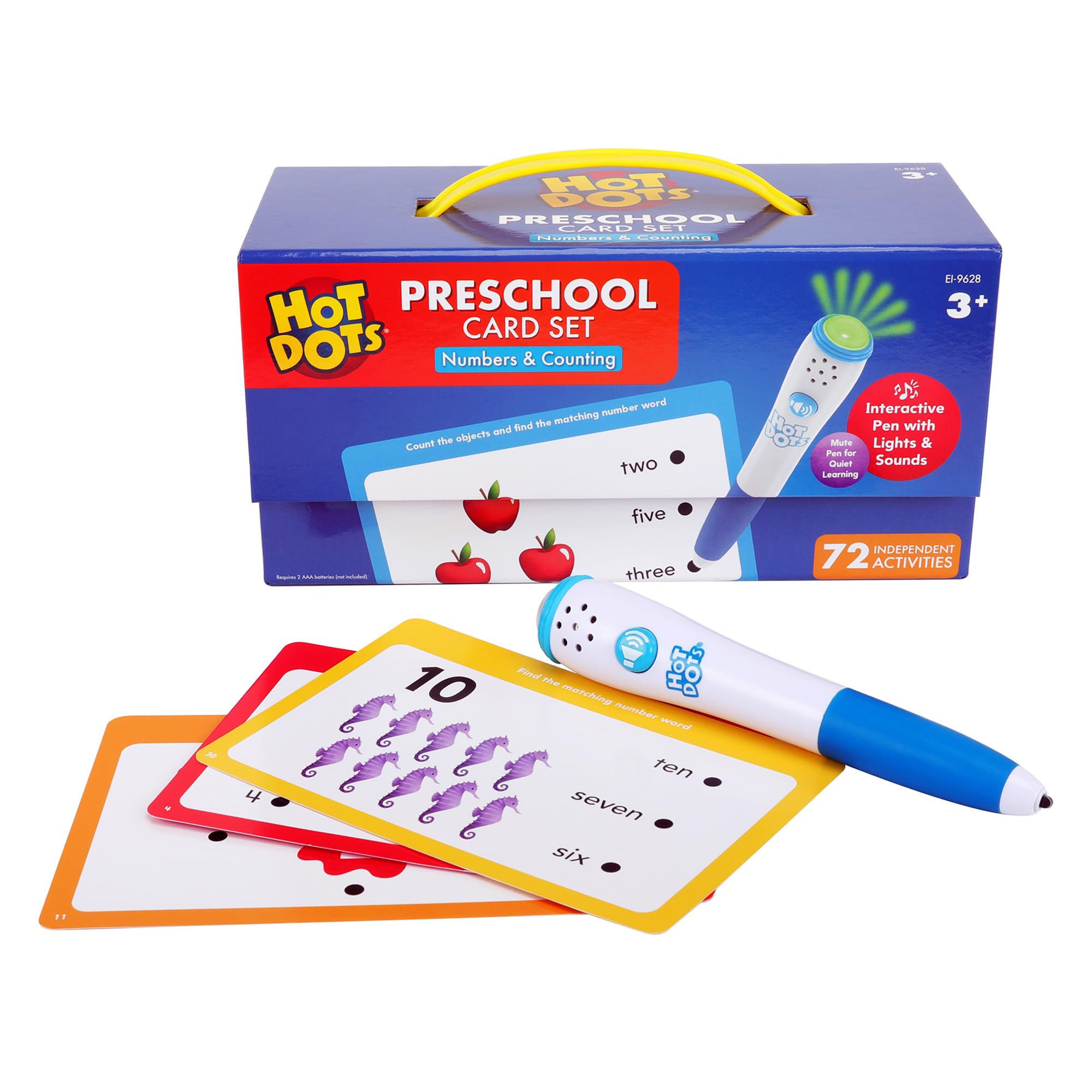
- Includes 36 double-sided cards for 72 activities.
- Practices number recognition, number words, counting, and sequencing.
- Includes an interactive pen and handled storage case.
Best For: Preschoolers practicing number recognition, counting, and sequencing with feedback.
Learning Resources Minute Math Electronic Flash Card
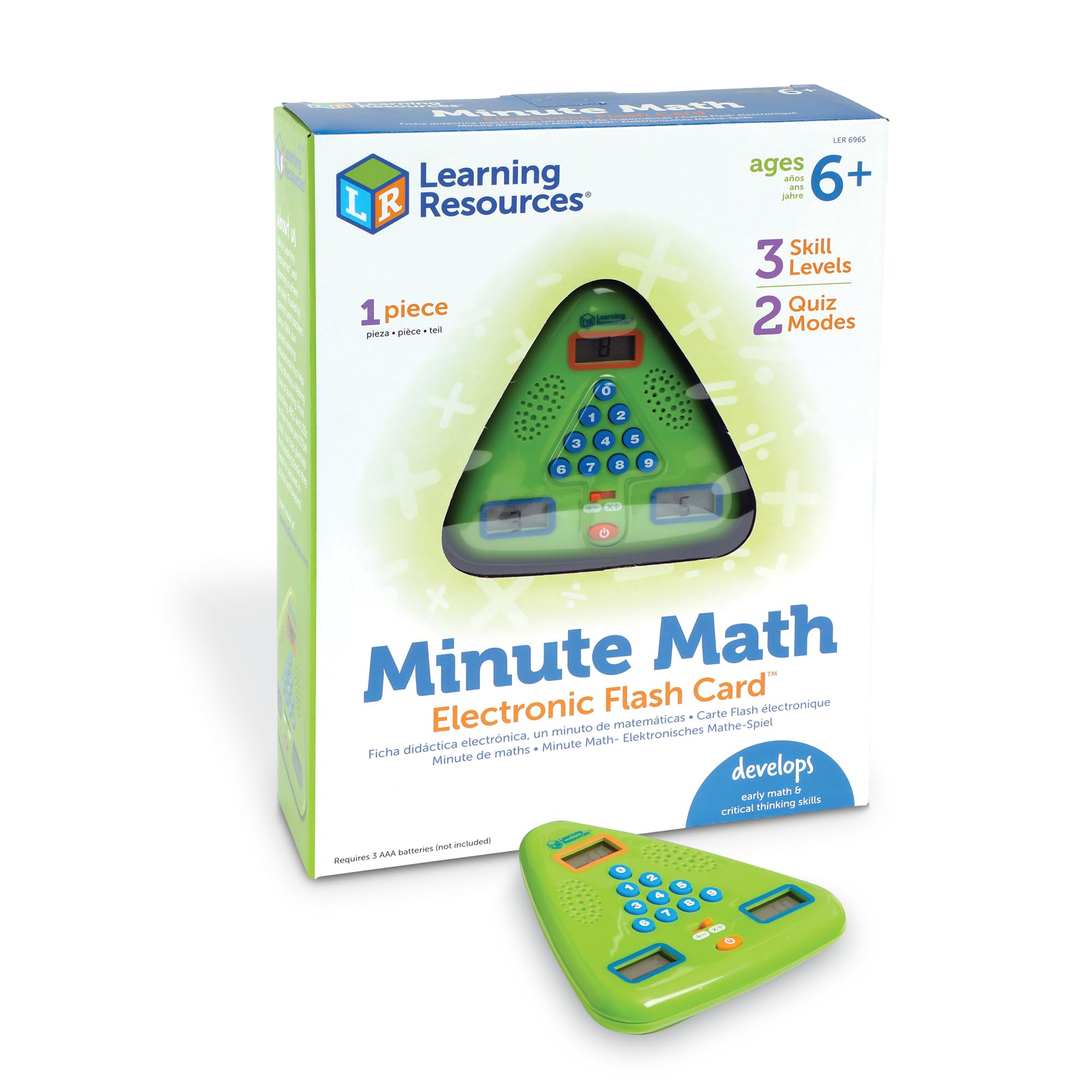
- Practices addition, subtraction, multiplication, and division.
- Uses one-minute timed challenges.
- Offers three progressive skill levels and a silent mode.
Best For: Learners practicing addition, subtraction, multiplication, and division through timed rounds.
Learning Resources Word Whiz Electronic Flash Card
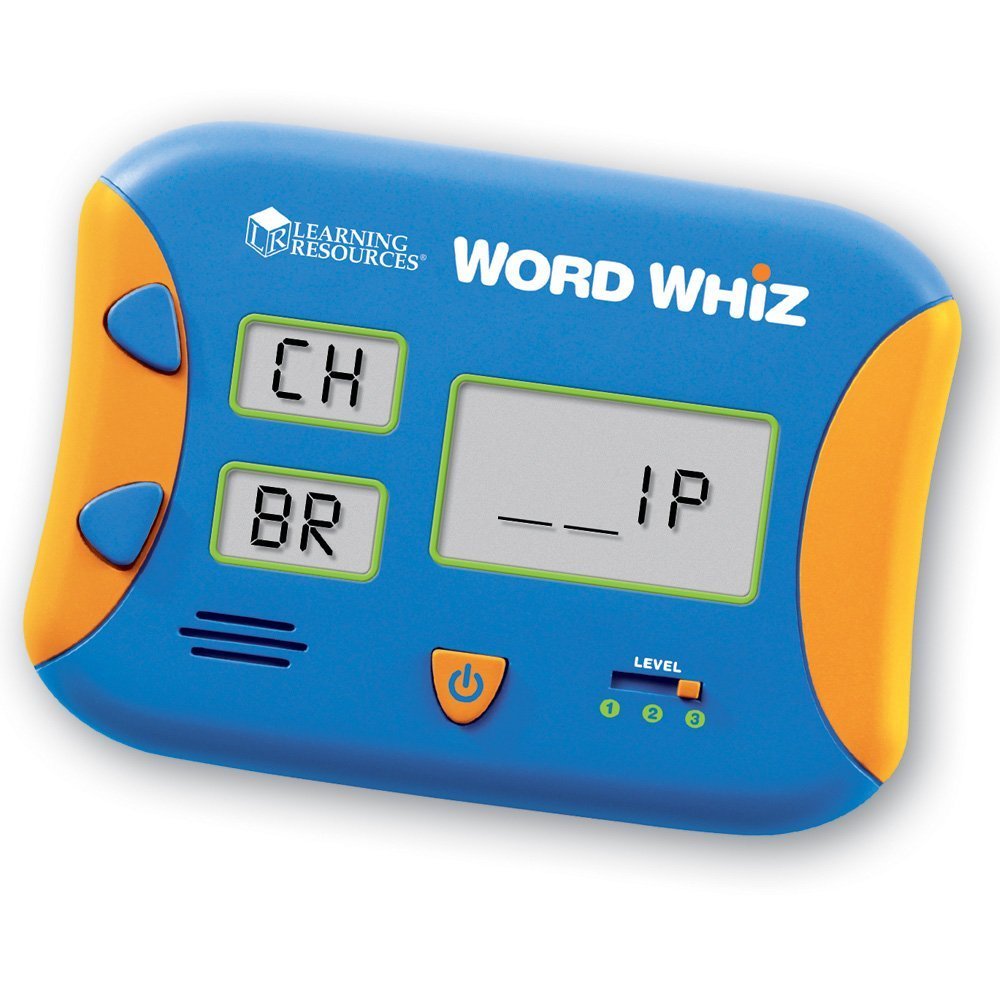
- Challenges children to build three-, four-, and five-letter words.
- Practices beginning letters, blends, and word families.
- Includes three skill levels and volume control.
Best For: Children aged five and up building short words from letters, blends, and word families.
hand2mind 3D Sound and Phonics Cards
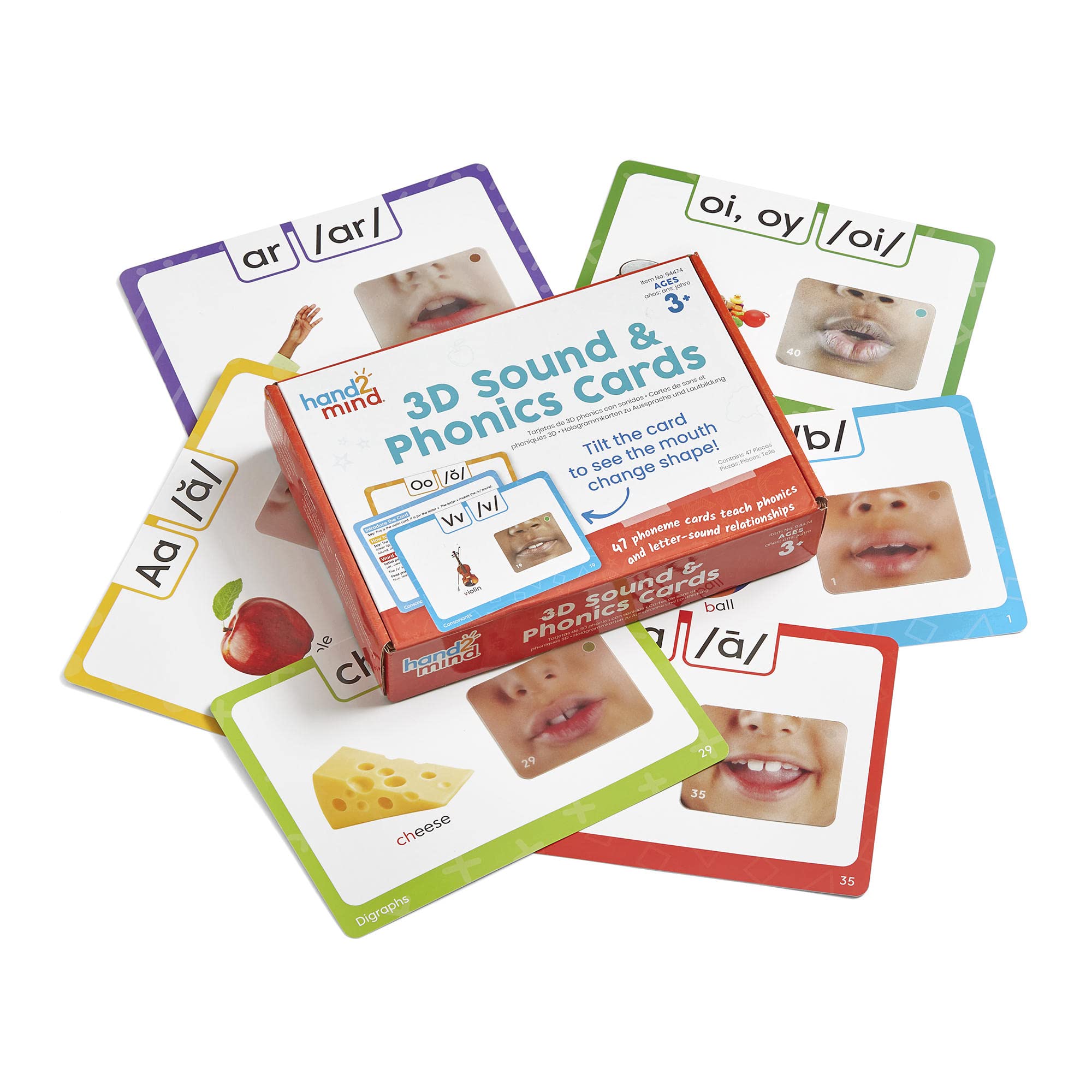
- Covers 47 sounds and shows mouth movements from start to finish.
- Cards include teaching tips, sound formation guidance, and example words.
- The image changes to show tongue, lips, and mouth positions.
Best For: Learners practicing how to form speech sounds alongside phonics and articulation.
Spanish & English Talking Flash Cards, 510 Words
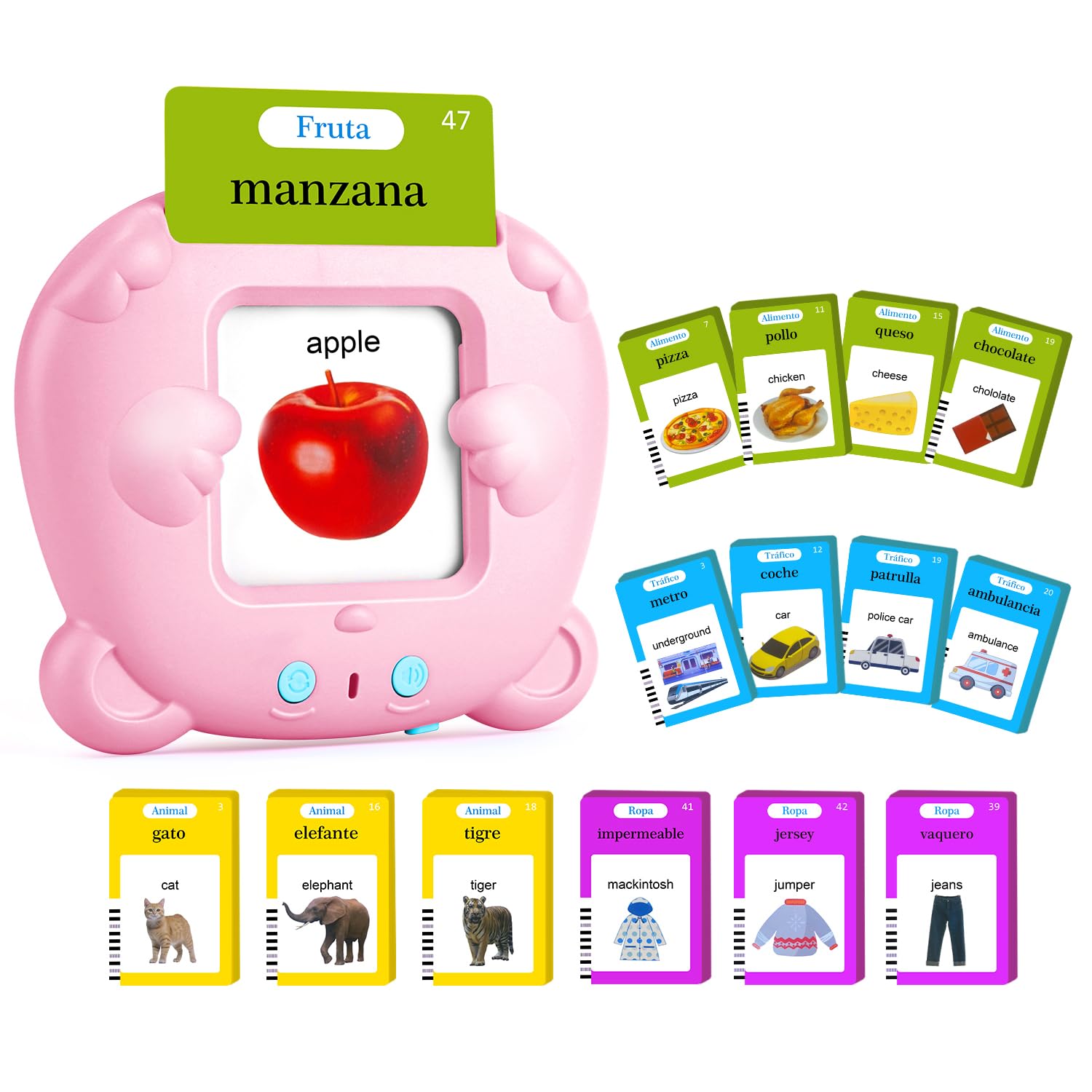
- Includes 255 double-sided cards covering 510 words.
- Covers animals, transportation, food, fruits, vegetables, people, and jobs.
- Offers three audio modes and three children's songs.
Best For: Young learners building Spanish-English vocabulary with audio prompts and illustrated cards.
English Talking Flash Cards for Toddlers
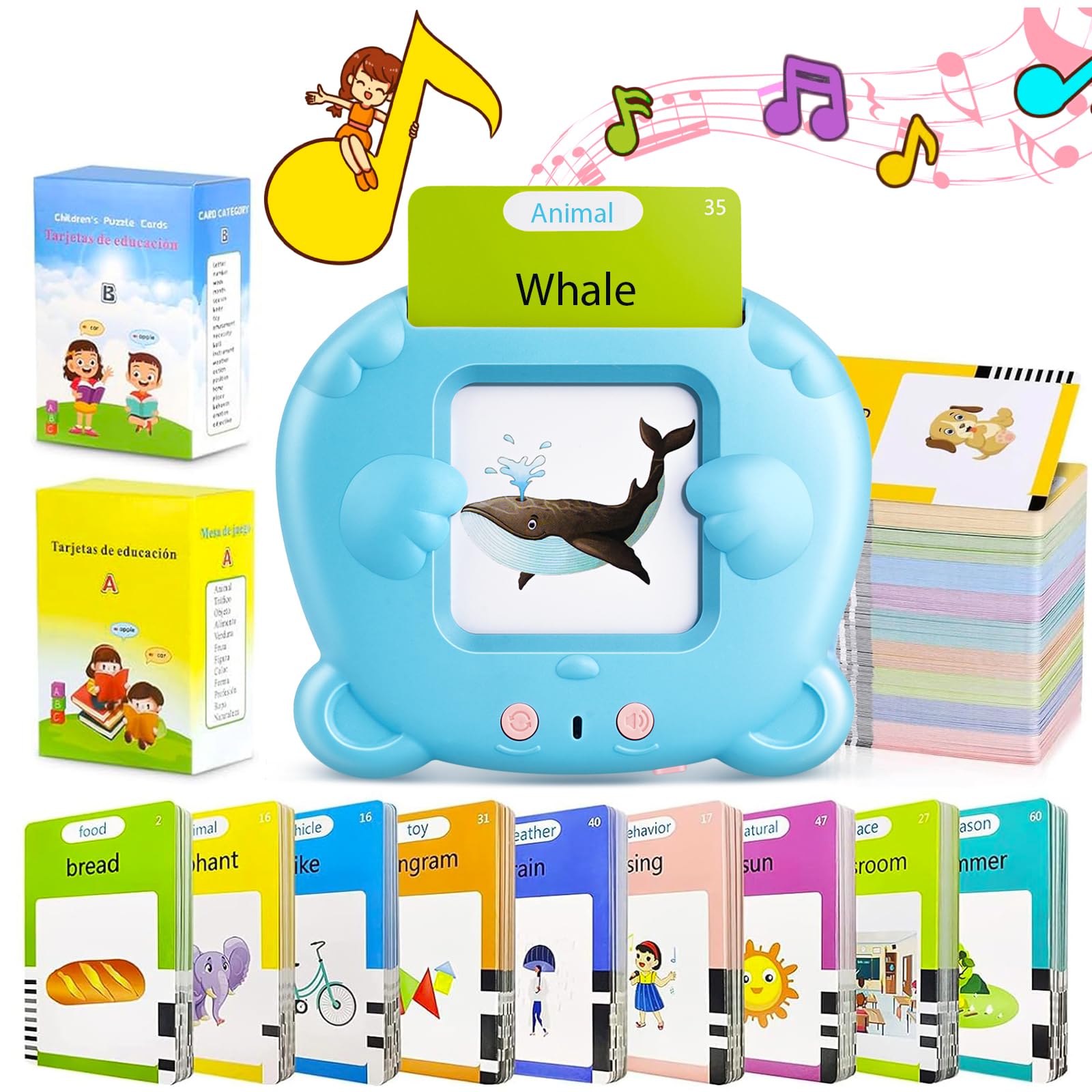
- Includes 255 double-sided cards with 510 words.
- Topics include numbers, colors, ABC, animals, and everyday categories.
- Reader has a rechargeable battery rated up to 4.5 hours.
Best For: Toddlers practicing English words across everyday categories with audio and picture cues.
Interactive Phonics Practice
Educational Insights Hot Dots Phonics Fun Set - Preschool and Kindergarten Flash Cards Compatible with Interactive Pen, Preschool Learning Activities, Learn to Read Activity for Kids Ages 3 and Up
This Hot Dots set pairs reading practice with an answer-checking pen, so children can work through activities at their own pace. The 80 double-sided cards provide 160 activities covering letter sounds, long and short vowels, blends, digraphs, and sight words.
The pen gives visual and audio feedback, with green for correct answers and red for incorrect ones, and its sounds can be muted. That makes the format useful for independent practice or a quiet activity when the sound is off.
The pen needs two AAA batteries, which are not included, so have those ready before use.
Best For: Preschool and kindergarten learners practicing letter sounds, blends, and sight words.
| Pros | Cons |
|---|---|
|
|
Choose this set when a preschooler or kindergartener is ready to practice several early reading skills with immediate feedback. Its breadth is a strength, while children who need only alphabet exposure may find the 160 activities more than they need.
Check that the learner can use the pen independently and keep two AAA batteries available. The pen’s sound can be muted, so audio feedback is optional.
Large-Format Alphabet Recognition
hand2mind Alphabet Picture Mnemonic Cards, ABC Flashcards for Kids, Classroom Alphabet Cards, Early Learning Flash Cards, Letter Recognition, Montessori Alphabet Cards, Toddler Learning Activities
These jumbo alphabet cards link lowercase letter shapes to familiar pictures as a memory cue for letter sounds. Each card is double-sided, with uppercase and lowercase practice on the reverse, and the set includes an activity guide for letter recognition, phonics, and word building.
At 6 by 8 inches, the cards are sized for visibility in classroom displays and group activities. The 26-card format keeps the focus on the alphabet rather than a broad collection of subjects.
It suits guided practice at home or in a classroom center, especially when children benefit from a strong visual connection between a letter and its sound.
Best For: Young learners and classroom groups connecting letter shapes with sounds and images.
| Pros | Cons |
|---|---|
|
|
This is a good fit when letter recognition and sound associations are the priority, especially for a small group that needs large, visible cards. The picture cues add a memory aid, and the activity guide extends practice into word building.
It does not provide electronic feedback or a wide subject range, so consider whether adult-led activities suit the child. Check that the jumbo card size works for the intended storage space.
Playful Sight-Word Game
Learning Resources Sight Word Stomp! - Alphabet Toys, Phonics Flash Cards, Classroom Board Games, ABC Homeschool, Reading Manipulatives, Gifts for Boys and Girls, Visual Vocabulary
Sight Word Stomp! turns word recognition practice into a physical matching game with four dinosaur stompers that attach to the word cards using suction cups. The set has 110 double-sided cards containing 220 sight words, color-coded from Pre-Primer through Third Grade.
That progression gives caregivers and teachers a way to choose words by level, while the game format offers an alternative to repeating cards in a conventional drill. It is intended for ages five and up and can be used at home, in classrooms, or in learning centers.
The active play style may suit children who engage more readily when practice includes a game.
Best For: Children from preschool through early elementary who enjoy active word games.
| Pros | Cons |
|---|---|
|
|
Choose this set for a child who likes movement and playful competition during reading practice. Its staged sight-word cards support progression across early grades, and the four stompers make the activity distinct from ordinary flash-card review.
It is less suitable when quiet, seated recall practice is the goal. Confirm the child is ready for the age-five-and-up format and has room to spread out the cards and game pieces.
Self-Correcting Number Activities
Educational Insights Hot Dots Numbers & Counting Set - Preschool Learning Activities, Interactive Math Flash Cards for Toddlers 3-5 Years, Kindergarten Classroom Must Haves & Homeschool Essentials
This preschool math set combines number cards with an interactive pen that responds as children select an answer. The 36 double-sided cards provide 72 activities involving number recognition, number words, counting, and sequencing.
The pen gives visual and audio feedback, with green for a correct answer and red for an incorrect one, and it can be muted. A handled storage case makes the set easier to carry between home and classroom use.
It is aimed at ages three to five, making it a focused choice for early number practice rather than a general-purpose math set.
Best For: Preschoolers practicing number recognition, counting, and sequencing with feedback.
| Pros | Cons |
|---|---|
|
|
This set fits preschoolers who are beginning to count and recognize numbers and can benefit from immediate feedback. The 72 activities give it a more structured practice range than a simple picture-card set, while the carrying case helps keep the components together.
Its focus is preschool math, so it will not cover later arithmetic. Check whether the child can use the answer-checking pen and supply two AAA batteries.
Four-Operation Math Review
Learning Resources Minute Math Electronic Flash Card - Classroom Must Haves, Homeschool Supplies, Math Manipulatives, Multiplication Chart, Educational Toys for Toddlers, Back to School
Minute Math is an electronic flash-card device for practicing all four arithmetic operations. Its one-minute timed challenges make it a fit for children who benefit from short, game-like review, and three progressive skill levels are designed to span first grade through middle school.
A silent mode lets children practice without sound in a classroom, waiting room, or car. Because the device centers on recall speed and timed challenges, it is more focused on quick math practice than on explaining how to solve a problem.
It works as a portable supplement to instruction when the learner already recognizes the operation being practiced.
Best For: Learners practicing addition, subtraction, multiplication, and division through timed rounds.
| Pros | Cons |
|---|---|
|
|
Pick Minute Math when the goal is repeated recall practice across the four operations, particularly in short sessions or while traveling. It offers broader operation coverage than a multiplication-only device, and its silent mode adds flexibility.
The timed format may not suit a learner who needs untimed instruction or worked examples. Check that the child is comfortable with a speed-based activity and choose the level that fits current skills.
Timed Word-Building Practice
Learning Resources Word Whiz Electronic Flash Card, Letter Games for Kids, Word Recognition, Ages 5+
Word Whiz gives children a timed electronic activity for building three-, four-, and five-letter words. Its challenges ask players to combine beginning letters and blends with word families, creating focused practice in word construction rather than simple word recognition.
Three skill levels let the activity adjust as a child progresses, and the handheld device includes immediate feedback and volume control. The one-minute pace can add energy to review, but it also means this is a better match for a child ready to work quickly than for a beginner who needs time to explore each sound.
It is designed for ages five and up.
Best For: Children aged five and up building short words from letters, blends, and word families.
| Pros | Cons |
|---|---|
|
|
Choose Word Whiz for a child ready to combine sounds into short words and who enjoys a timed challenge. The three levels and focus on blends and word families make it more targeted than broad alphabet cards.
Its fast pace can be a drawback for a learner who needs to pause and sound out each part. Check that the child is comfortable with a handheld electronic format and the age-five-plus guidance.
Visual Mouth-Movement Phonics
hand2mind 3D Sound and Phonics Cards, Phonemic Awareness, Phonics Flash Cards, Letter Sounds for Kindergarten, Speech Therapy Toys, ESL Teaching Materials, Science of Reading Manipulatives
These cards use changing three-dimensional images to show mouth movements as a sound is formed. The set covers 47 sounds, and each card includes teaching tips, sound-formation guidance, and example words.
By showing the tongue, lips, and mouth at different points, the cards give adults a visual tool for phonics instruction and articulation practice. Their durable format is intended for repeated handling in small groups or classroom centers.
This approach is more specialized than alphabet or sight-word cards, so it is most useful when learners need to connect a sound with the mouth movements used to produce it.
Best For: Learners practicing how to form speech sounds alongside phonics and articulation.
| Pros | Cons |
|---|---|
|
|
Consider these cards when the learning goal includes both recognizing phonemes and seeing how sounds are formed. The changing images provide a distinctive visual aid, while teaching tips and example words help an adult guide practice.
This specialization means they are not a broad early-learning deck for numbers, sight words, or general vocabulary. Check whether the child or group will use the articulation guidance, and plan for adult-led explanation where needed.
High-Volume Spanish-English Vocabulary
Spanish & English Talking Flash Cards for Kids, 510 Sight Words Bilingual Flash Cards, ABC & Number Learning Toys, Montessori Toys, Speech Therapy Toys, Children's Sensory Preschool Birthday Gifts
This talking-card set pairs Spanish and English vocabulary with a reader that speaks the inserted word and plays simulated sounds. It includes 255 double-sided cards covering 510 words across topics such as animals, transportation, food, fruits, vegetables, people, and jobs.
Three audio modes provide rotating bilingual playback or an English-only or Spanish-only setting, and the reader includes three children's songs. The rechargeable battery lasts up to 4.5 hours, according to the product details, and the design is screen-free.
Check the mode descriptions before purchase, since the supplied details refer to language choices in their audio-mode instructions.
Best For: Young learners building Spanish-English vocabulary with audio prompts and illustrated cards.
| Pros | Cons |
|---|---|
|
|
This option is aimed at families seeking Spanish-English vocabulary practice through both images and audio. Its 510-word set covers everyday themes, and the reader can provide independent prompts while the songs add another activity.
Before buying, confirm the audio mode language options work for your intended use: the supplied instructions describe Spanish and English, though some other details in the record are inconsistent. Also check whether a talking reader suits the child's preferred learning style.
English-Only Talking Vocabulary
English Talking Flash Cards for Toddlers, 510 Sight Words Learning Toy
This English-language talking-card set has a reader and 255 double-sided cards covering 510 words. Its topics include numbers, colors, the alphabet, animals, transportation, food, clothing, people, and jobs, with simulated sounds and three children's songs.
The reader speaks words aloud as cards are inserted and has a built-in rechargeable battery rated for up to 4.5 hours. This offers a broad vocabulary activity without adding a second language, which can suit families focused on English word exposure.
The cards require the reader, so check that an audio-based format fits the child's routines and that the device can be charged as needed.
Best For: Toddlers practicing English words across everyday categories with audio and picture cues.
| Pros | Cons |
|---|---|
|
|
Choose this set for a toddler who is beginning to hear and name a broad range of English words. The many topics and audio prompts create variety, while the screen-free card format keeps a physical learning object in the activity.
It relies on a reader and rechargeable power, unlike a simple paper deck. Check whether the child can handle inserting cards and whether the device will be charged before planned practice.
How to Choose Educational Flash Cards
How We Picked Educational Flash Cards
We prioritized products that make a clear learning task visible in the materials: phonics and sight-word review, early number practice, arithmetic recall, word building, vocabulary exposure, or sound sorting. The selected range includes conventional picture cards, interactive answer-checking sets, handheld electronic drills, and a talking reader, so families can match format as well as subject.
Age guidance and the kind of participation matter. A learner who can work independently may benefit from pen feedback or a talking reader; younger children may do better with an adult leading picture and letter activities.
We favored distinct uses and avoided filling the guide with near-identical language variants or products where cards are only a small part of a different activity.
Comparing Educational Flash Cards by Learning Goal
For early reading, Hot Dots Phonics Fun gives feedback across letter sounds, vowels, blends, digraphs, and sight words. hand2mind's alphabet cards use picture mnemonics and large cards for letter-sound practice, while Sight Word Stomp makes sight-word recall active through a game. Word Whiz targets building short words, and the 3D Sound and Phonics Cards focus on seeing how mouth positions form sounds.
Math choices span foundational and recall work. Hot Dots Numbers & Counting covers number recognition, counting, number words, and sequencing; Minute Math practices all four operations in timed rounds.
The talking readers emphasize vocabulary rather than answer selection, while Sort That Sound offers a tray-based way to group picture tiles by phoneme.
| Product | Standout features | Best for |
|---|---|---|
| Educational Insights Hot Dots Phonics FunCheck Price |
| Preschool and kindergarten learners practicing letter sounds, blends, and sight words. |
| hand2mind Alphabet Picture Mnemonic CardsCheck Price |
| Young learners and classroom groups connecting letter shapes with sounds and images. |
| Learning Resources Sight Word Stomp!Check Price |
| Children from preschool through early elementary who enjoy active word games. |
| Educational Insights Hot Dots Numbers & CountingCheck Price |
| Preschoolers practicing number recognition, counting, and sequencing with feedback. |
| Learning Resources Minute Math Electronic Flash CardCheck Price |
| Learners practicing addition, subtraction, multiplication, and division through timed rounds. |
| Learning Resources Word Whiz Electronic Flash CardCheck Price |
| Children aged five and up building short words from letters, blends, and word families. |
| hand2mind 3D Sound and Phonics CardsCheck Price |
| Learners practicing how to form speech sounds alongside phonics and articulation. |
| Spanish & English Talking Flash Cards, 510 WordsCheck Price |
| Young learners building Spanish-English vocabulary with audio prompts and illustrated cards. |
| English Talking Flash Cards for ToddlersCheck Price |
| Toddlers practicing English words across everyday categories with audio and picture cues. |
Choosing Cards for Early Literacy and Phonics
Look at the exact skill the child needs to repeat. Letter-picture mnemonics can help connect shapes and sounds, while phonics cards may add vowel patterns, blends, or articulation guidance.
For sight-word practice, check whether a staged set like Sight Word Stomp matches the learner's reading level; for word construction, Word Whiz is oriented toward combining letters, blends, and word families.
Consider how much adult guidance is practical. Large alphabet cards work well for conversation and group display.
A sorting kit has many pieces and benefits from an adult organizing the activity, while self-correcting pens support more independent turns. Muted or quiet modes matter when practice takes place in a shared room.
Math Flash Cards: Counting, Recall, and Pace
For preschool math, choose cards that practice number recognition, counting, number words, or sequencing. The Hot Dots number set organizes those skills into two-sided activities and provides pen feedback.
For older learners who already understand operations, Minute Math offers timed practice across addition, subtraction, multiplication, and division.
Decide whether timed recall will motivate or frustrate the learner. Electronic drills focus on answering quickly, while card-and-pen activities can break practice into discrete questions.
Check battery requirements for pen-based sets and whether a mute option is available if sound would be disruptive.
Bilingual and Talking Flash Cards for Vocabulary
Talking cards add spoken prompts to illustrations, which can be useful when a child is learning new everyday words. The Spanish-English set covers 510 words across common topics and has selectable audio modes; the English-only reader covers a similarly broad selection without bilingual switching.
Before choosing a bilingual reader, verify the supported language modes and pronunciation variety meet your household's needs.
A talking reader depends on charging and correct card insertion. Consider whether the child can manage that interaction or whether an adult will guide each turn.
A traditional deck needs no device and invites conversation, but does not provide recorded pronunciation or simulated sounds.
Who Should Buy Which Educational Flash Cards?
Choose Hot Dots Phonics Fun for self-paced early reading practice, hand2mind alphabet cards for large visual letter-sound prompts, and Sight Word Stomp for active sight-word review. Word Whiz suits children ready to build short words, while the 3D cards are for sound formation and articulation practice.
For numbers, Hot Dots Numbers & Counting fits preschool skills and Minute Math fits timed arithmetic review. Pick the Spanish-English talking set for bilingual vocabulary with audio, or the English-only reader for broad English word exposure.
Sort That Sound is for guided phoneme sorting with trays and picture tiles.