For someone who is always asking how things work, a good birthday gift can turn curiosity into a shared activity or a new learning habit.
These seven ideas span different ages and interests, with options for exploring science, practicing math, building, reading, and recording new ideas.
7 Birthday Gift Ideas for People Who Love Learning
Rich Dad CASHFLOW Board Game
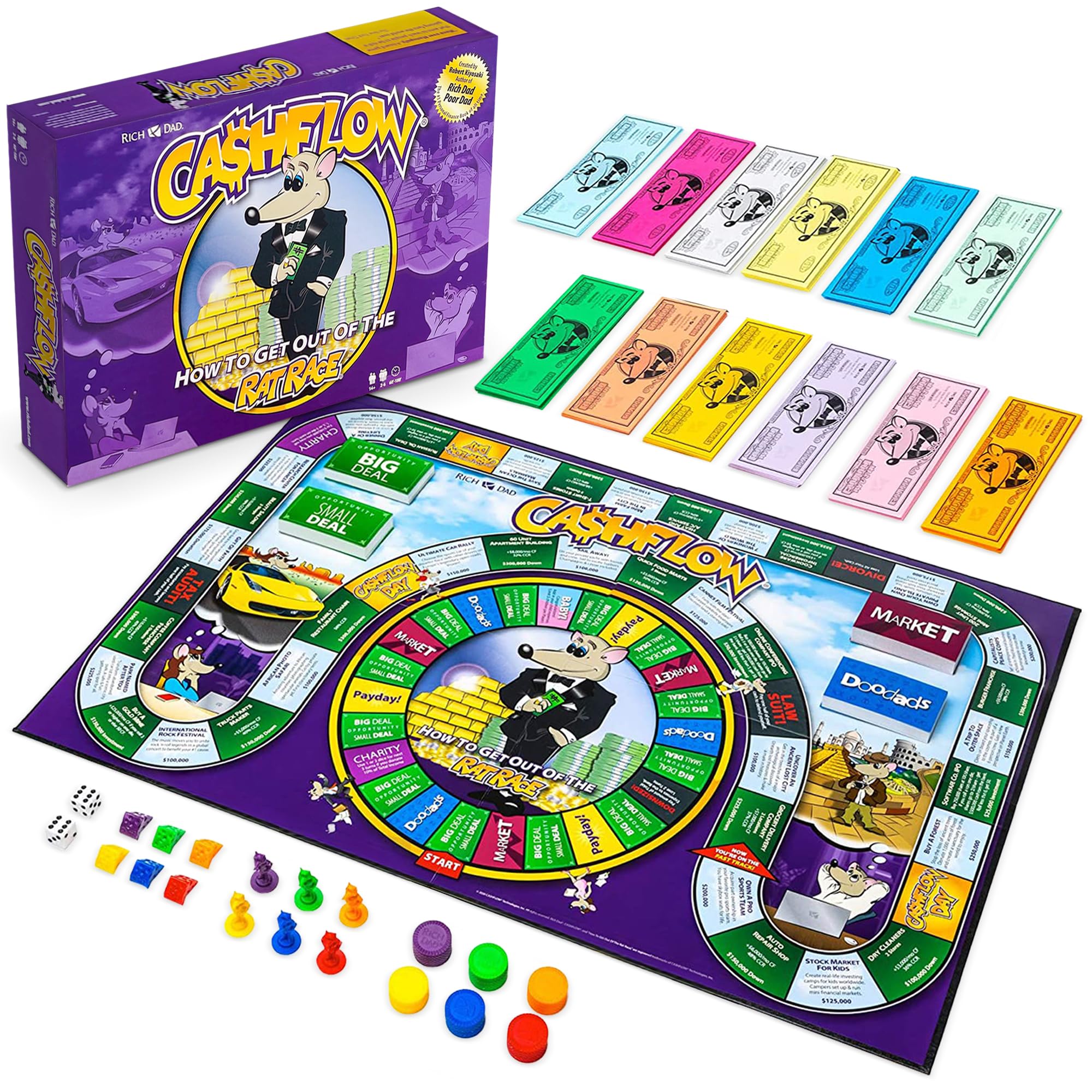
- A concept board game explores stocks and money saving.
- Play involves investing and business-building topics.
- Designed for collaborative family play.
Best Gift For: A teen or adult who enjoys learning about money through a collaborative family game.

Learning Resources 1-2-3 Build It Robot Factory

- Children can make imaginative robot creations.
- Building encourages early engineering and critical thinking.
- The pieces are designed for little hands.
Best Gift For: A young child who likes making robot creations and practicing early engineering skills.
Learning Resources Minute Math Electronic Flash Card

- Practice addition, subtraction, multiplication, and division.
- One-minute challenges make practice game-like.
- Silent mode can suit quiet practice away from home.
Best Gift For: A school-age learner who wants short math practice at home or while traveling.
Light-up Crystal Growing Kit for Kids

- Grow red, blue, and clear crystals.
- The included display lights up the finished crystals.
- An illustrated booklet explains how crystals form.
Best Gift For: A child interested in growing crystals and seeing a science project become a display.
Educational Insights GeoSafari My First Microscope
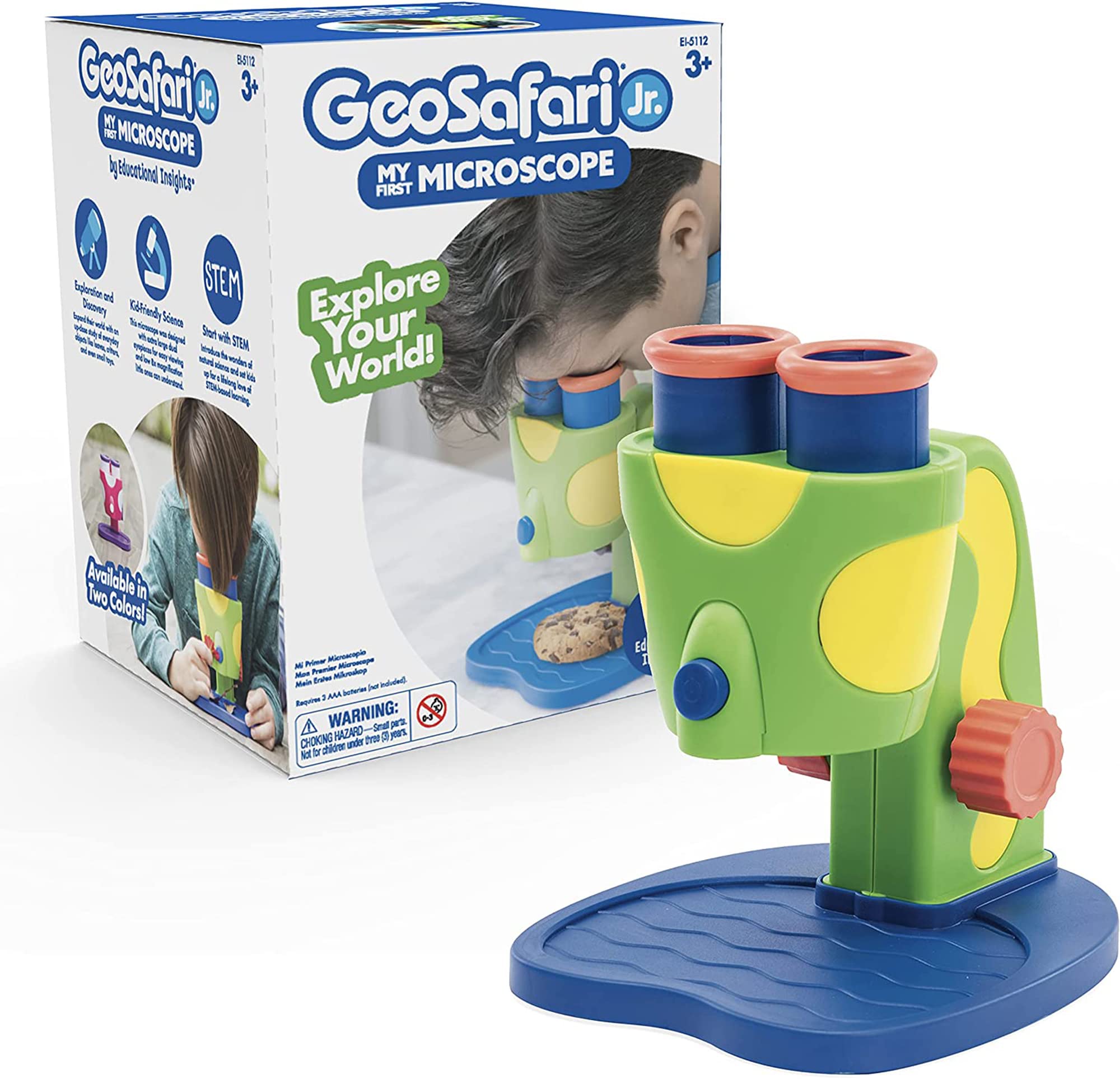
- Two large eyepieces make it easier to look through.
- An overhead LED illuminates the sample tray.
- The kit includes prepared slides for exploring.
Best Gift For: A young child curious about taking a closer look at the world around them.
Glocusent Book Light, 3-Color & 6-Brightness Neck Light

- Choose from three color temperature modes.
- Adjustable arms help direct light where it is comfortable.
- Rechargeable battery offers up to 80 hours for general reading with one head.
Best Gift For: A book lover who enjoys reading in bed or wants hands-free light for focused reading.
Whitelines Graph Notebooks, 3-Pack

- The pack contains three spiral notebooks.
- Gray graph paper has a light tint.
- The app can remove the page background from notes or drawings.
Best Gift For: A learner who takes notes or sketches and wants an option for sharing digital versions.
1. Match birthday gifts for people who love learning to their curiosity
Start by noticing what the recipient already chooses to do when they have free time. A child who takes apart toys may enjoy building and experimenting, while someone who asks how money works may welcome a game that opens a conversation.
A reader or careful note-taker might get more use from a light or notebook than from another activity kit.
Age and independence matter as much as subject. A hands-on project can be exciting when a grown-up has time to join in, but a learner who likes quiet solo routines may prefer something they can pick up in short sessions.
Consider whether the gift will be used at home, on a trip, or as part of a family activity.
For birthday gifts for people who love learning, think about the experience you want to give: a shared evening, a small discovery, or a tool that supports an existing habit. A present feels more personal when it fits how someone already learns, rather than asking them to adopt an entirely new routine.
2. Balance the budget with the kind of experience
Learning gifts span simple supplies and more involved activities, so decide what role the present should play before shopping. A notebook or reading aid can complement an existing interest, while an experiment or family game can become the main event.
Choose a level that feels comfortable without assuming that a higher spend guarantees a better fit.
For a child, check whether the activity will need an adult’s time or any additional household supplies. A gift that looks self-contained may still be more enjoyable with someone nearby to read instructions, talk through ideas, or help tidy up.
For an older learner, consider whether the gift adds something useful to a routine they already have.
Check actual prices before buying, since they can change. If a selected activity requires batteries or another item, include that in your budget and make sure the recipient can use it.
A modest, well-matched present with a note about why you chose it can feel more thoughtful than a larger gift chosen without their interests in mind.
3. Personalize birthday gifts for people who love learning
Add a small personal touch that connects the gift to the recipient’s questions or interests. Pair a science activity with a handwritten prompt about something to observe, or tuck a note into a notebook encouraging them to save a favorite idea.
For a game, suggest a family evening and invite the recipient to choose the snacks or the first round.
Presentation can build anticipation without adding much expense. Wrap a book light with a bookmark, bundle a notebook with a good pen you already know they like, or place a hands-on activity in a reusable bag with a card describing when you might enjoy it together.
Keep add-ons practical and avoid including supplies unless you know they suit the product.
The best birthday gifts for people who love learning also leave room for the recipient to make the experience their own. A child may want to repeat an experiment or invent a different creation; an adult may appreciate a tool that quietly supports reading or note-taking.
A warm, specific message can make that freedom feel intentional.
4. Choose for lasting use, not just the birthday moment
Think about what happens after the wrapping comes off. Some presents invite a single focused activity, while others can become part of daily reading, study, or idea capture.
Neither approach is automatically better: a one-evening project can create a memorable shared moment, while a practical tool can keep earning its place through regular use.
Consider the space and setup available. A busy household may prefer something easy to put away, while a learner with a desk or reading nook may welcome supplies they can keep close.
For gifts involving small parts or instructions, think about who will help organize them and whether the recipient has a comfortable place to use them.
If you are choosing for someone whose interests are changing, favor a gift with more than one way to engage. A project can prompt questions, a game can invite discussion, and a notebook can hold sketches as well as notes.
A flexible use gives the recipient room to follow a new question when curiosity takes an unexpected turn.
5. Make a last-minute choice carefully
When time is short, start with what you know about the recipient rather than browsing every possible category. Pick one clear interest, then compare a few suitable choices and read the current product details carefully.
Check the age guidance, what is included, and whether any required accessories need to be purchased separately.
Before placing an order, confirm compatibility with the recipient’s devices or supplies where relevant, and check dimensions if storage or portability matters. Review the current delivery estimate for the destination instead of assuming a gift will arrive by a particular date.
If timing is uncertain, a printed card explaining the planned gift can still make the birthday feel considered.
A simple presentation can complete a last-minute purchase: write a personal note, wrap it neatly, or plan a date to enjoy the activity together. Keep the message concrete, such as recalling a question the recipient asked or a book they recently enjoyed.
That detail shows care even when the shopping window was brief.