This review hbada e3 pro looks at a mesh office chair built around adjustable support at the lower back, neck, and arms.
Its range of fit adjustments may appeal to people who spend long stretches at a desk and want to shift between upright work and reclining breaks.
Hbada E3 Pro Review Summary
The quick verdict
1,000+ ratings
Read Amazon ReviewsHbada E3 Pro
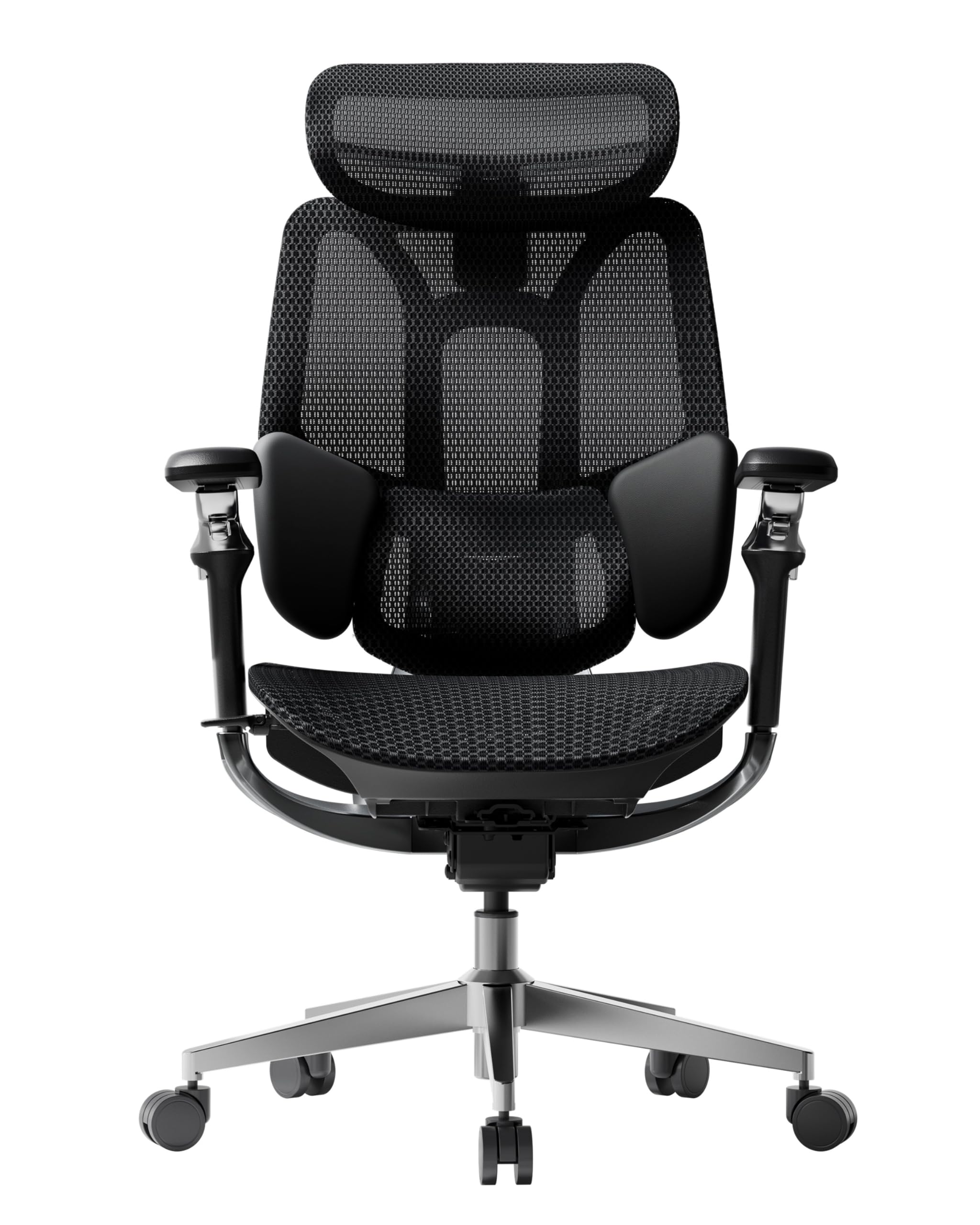
A mesh office chair for desk workers seeking adjustable lumbar, head, and arm support, with a broad recline range and a stated fit for 5'1" to 6'5" users.
- Three-zone floating lumbar support uses pivoting side wings with a 40°–80° movement range and 60 mm of vertical adjustment.
- The dual-axis headrest offers 70 mm of depth adjustment, 40 mm of height adjustment, and 70° of rotation.
- The recline mechanism offers positions at 105°, 115°, 130°, and up to 140°; its tilt tension is described as responding to body weight.
- The mesh is described as high-elasticity CloudMesh, while the mechanical armrests rotate 360° in either direction and fold by 39°.

Pros
- Multiple lumbar adjustments allow the support position to be tailored vertically and laterally.
- The headrest provides several adjustment directions rather than a single height change.
Consider before buying
- The listed maximum weight recommendation is 300 pounds, which may rule it out for buyers who need a higher capacity.
- The extensive adjustment set may take some time to configure; buyers who prefer simple, fixed controls may find it more involved.
Read the full review summary
The Hbada E3 Pro’s defining idea is fit flexibility: its lumbar support has vertical travel and pivoting side wings, while the backrest, seat depth, and headrest each have their own adjustments.
A weight responsive recline and multi-directional armrests add options for changing posture without treating the chair as a fixed upright seat.
It is aimed at adults within the stated 5'1" to 6'5" height range who want mesh upholstery and numerous contact-point adjustments.
The listed 300-pound maximum weight recommendation, seat dimensions, and armrest movement are worth checking against your body and desk before buying, since those details shape everyday fit more than a long feature list does.
The buying factors
Hbada E3 Pro Scorecard
Editorial scores reflect listed features and buyer fit; they are not laboratory measurements or customer ratings.
Lumbar adjustability
The three-zone support combines 60 mm of vertical adjustment with lateral wings that pivot from 40° to 80°.
Headrest flexibility
The dual-axis headrest adjusts in depth, height, and rotation, giving buyers several ways to position neck support.
Recline range
Four described positions extend up to 140°, covering focused work through a deeper resting angle.
Armrest versatility
Dual 360° rotation and 39° folding offer broad repositioning for different arm positions.
Fit range
Backrest height and seat depth adjustments complement the stated user-height range, though individual fit still depends on proportions.
Breathable materials
The high-elasticity mesh back is described as promoting airflow, a practical feature for long desk sessions.
Capacity and standards
The chair lists a 300-pound maximum and SGS-certified Class 4 gas cylinder with BIFMA compliance.
Key Features and Specifications of Hbada E3 Pro
- Three-zone floating lumbar support uses pivoting side wings with a 40°–80° movement range and 60 mm of vertical adjustment.
- The dual-axis headrest offers 70 mm of depth adjustment, 40 mm of height adjustment, and 70° of rotation.
- The recline mechanism offers positions at 105°, 115°, 130°, and up to 140°; its tilt tension is described as responding to body weight.
- The mesh is described as high-elasticity CloudMesh, while the mechanical armrests rotate 360° in either direction and fold by 39°.
- Fit adjustments include 80 mm of backrest travel, 60 mm of lumbar movement, and 50 mm of seat-depth adjustment. The stated user-height range is 5'1" to 6'5".
- The chair has a listed maximum weight recommendation of 300 pounds and an SGS-certified Class 4 gas cylinder; BIFMA compliance is also specified.
Pros and Cons of Hbada E3 Pro
Pros
- Multiple lumbar adjustments allow the support position to be tailored vertically and laterally.
- The headrest provides several adjustment directions rather than a single height change.
- Several recline positions, including one up to 140°, give flexibility for task changes and breaks.
- The 50 mm seat-depth adjustment and stated height range may make it easier to tune the fit across different body proportions.
Consider before buying
- The listed maximum weight recommendation is 300 pounds, which may rule it out for buyers who need a higher capacity.
- The extensive adjustment set may take some time to configure; buyers who prefer simple, fixed controls may find it more involved.
- Check the listed dimensions and seat-depth range against your desk and preferred sitting position, especially if you need a particular seat height or cushion feel.
Who Should Buy Hbada E3 Pro?
Good fit
Consider the Hbada E3 Pro if you want to fine-tune how a mesh chair meets your back, neck, and arms.
The separate lumbar, backrest, seat-depth, and headrest adjustments address several fit points, while the weight-responsive recline gives you multiple angles for moving between tasks and taking a break.
It is a particularly relevant option for buyers inside the stated height range who value adjustable support and airflow-oriented mesh.
Before choosing it, compare the 300-pound maximum recommendation with your needs and check whether the seat dimensions, 50 mm depth adjustment, and armrest positions suit your body and desk.
Who should skip it
Skip this chair if you need a model with a maximum weight recommendation above 300 pounds. Its stated limit does not meet that requirement.
Look elsewhere if you want a chair with very few adjustments or need a specific seat size or cushion material that is not established by the listed dimensions and material details.
Confirm those fit and comfort preferences before committing.
How the Hbada E3 Pro’s Adjustments Shape the Fit
Lumbar support across changing postures
The lumbar system is designed to move in two useful ways: vertical adjustment changes where support meets the lower back, and pivoting wings change how broadly it wraps around the sides.
That gives buyers more tuning options than a single fixed pad, though personal comfort will still depend on whether the chair’s contact points align with their back.
Head and arm positioning
Headrest depth, height, and rotation adjustments give users room to set neck contact for an upright posture or a reclined one.
The armrests’ rotation and folding can similarly help adapt elbow support as posture changes; check that their movement works with your desk height and how close you want to sit to the desk.
Recline for work and breaks
The four described angles range from 105° to 140°, making the chair suitable in concept for alternating between more upright desk work and reclining periods.
A weight-responsive tilt mechanism is intended to adjust resistance with the user, but buyers who prefer manually set tension should consider whether that approach matches their preference.
Sizing and material considerations
The 80 mm backrest travel and 50 mm seat-depth adjustment support the chair’s broad stated user-height range, while the mesh construction is intended to encourage airflow.
Compare the chair’s overall dimensions with your room and desk, and verify that its listed 300-pound limit and seat fit match your own requirements.
Alternatives to Hbada E3 Pro
Home Office Desk Chairs alternative
17,000+ ratings
Read Amazon ReviewsSIHOO M18
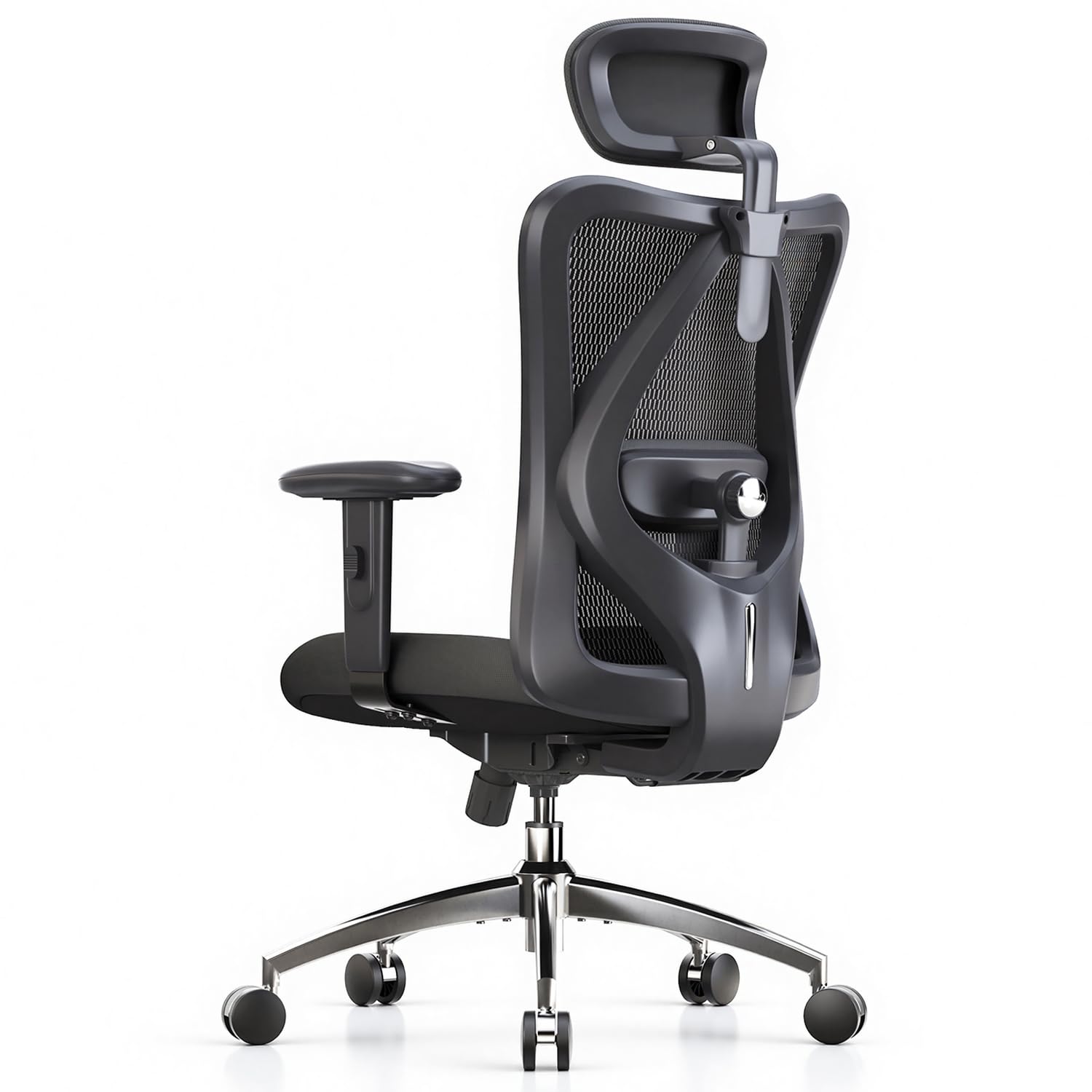
Consider the SIHOO M18 if the narrower stated height range fits you and a higher listed weight capacity matters more than the E3 Pro’s broader adjustment set.
The Hbada is the more compelling fit to explore if its seat-depth travel, multi-axis headrest, and rotating armrests are priorities.
- The SIHOO M18 describes adjustable seat height, headrest, lumbar support, and back support, with a stated fit for 5'6" to 6'2" users and a maximum capacity of 330 pounds.
- Its armrests are 2D.
- The Hbada E3 Pro emphasizes highly adjustable lumbar, headrest, and arm support, with a recline range up to 140° and a stated fit for users from 5'1" to 6'5".
Home Office Desk Chairs alternative
17,000+ ratings
Read Amazon ReviewsSIHOO B100 PRO
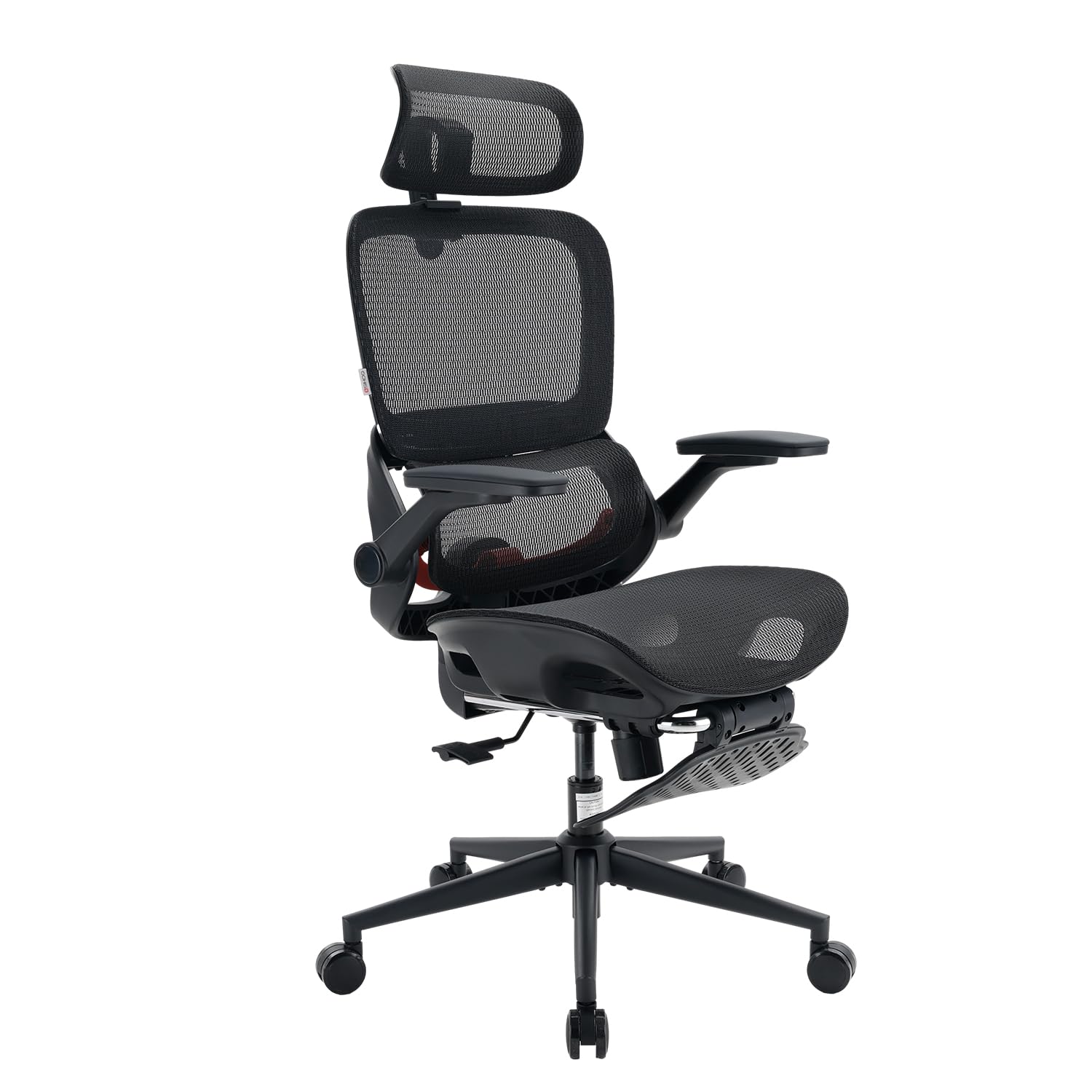
Choose the SIHOO B100 PRO if a retractable footrest and a widened cushioned seat are more important than the Hbada’s described lumbar and headrest adjustment ranges.
The E3 Pro better suits buyers focused on repositioning lumbar support and its deeper listed recline angle.
- The SIHOO B100 PRO includes a retractable footrest, a widened cushion, full-mesh seat and back, 4D armrests, and three recline angles up to 135°.
- Its stated maximum capacity is 300 pounds.
- The Hbada E3 Pro has adjustable lumbar wings, an adjustable dual-axis headrest, rotating and folding armrests, and a recline range up to 140°.
Is Hbada E3 Pro Worth It?
The Hbada E3 Pro is worth considering if you want a mesh office chair with extensive ways to tune lumbar, head, and arm support.
Its multiple recline positions and body-responsive tilt also suit people who move between focused desk work and reclining breaks.
Check the 300-pound maximum recommendation, listed dimensions, and adjustment ranges against your needs before buying.
If those fit and you value a chair with several adjustable contact points, the E3 Pro presents a coherent option; buyers with capacity or sizing requirements outside those limits should choose a better-fitting design.
Your review at a glance
1,000+ ratings
Read Amazon ReviewsHbada E3 Pro
A mesh office chair for desk workers seeking adjustable lumbar, head, and arm support, with a broad recline range and a stated fit for 5'1" to 6'5" users.
- Three-zone floating lumbar support uses pivoting side wings with a 40°–80° movement range and 60 mm of vertical adjustment.
- The dual-axis headrest offers 70 mm of depth adjustment, 40 mm of height adjustment, and 70° of rotation.
- The recline mechanism offers positions at 105°, 115°, 130°, and up to 140°; its tilt tension is described as responding to body weight.
- The mesh is described as high-elasticity CloudMesh, while the mechanical armrests rotate 360° in either direction and fold by 39°.