Science kits for kids offer hands-on activities across topics such as observation, nature, magnets, anatomy, and dinosaurs. Choose by the child’s age and interest, then consider whether you want guided experiments, open-ended tools, or a focused subject kit.
Quick Top Products
Learning Resources Primary Science Deluxe Lab Set
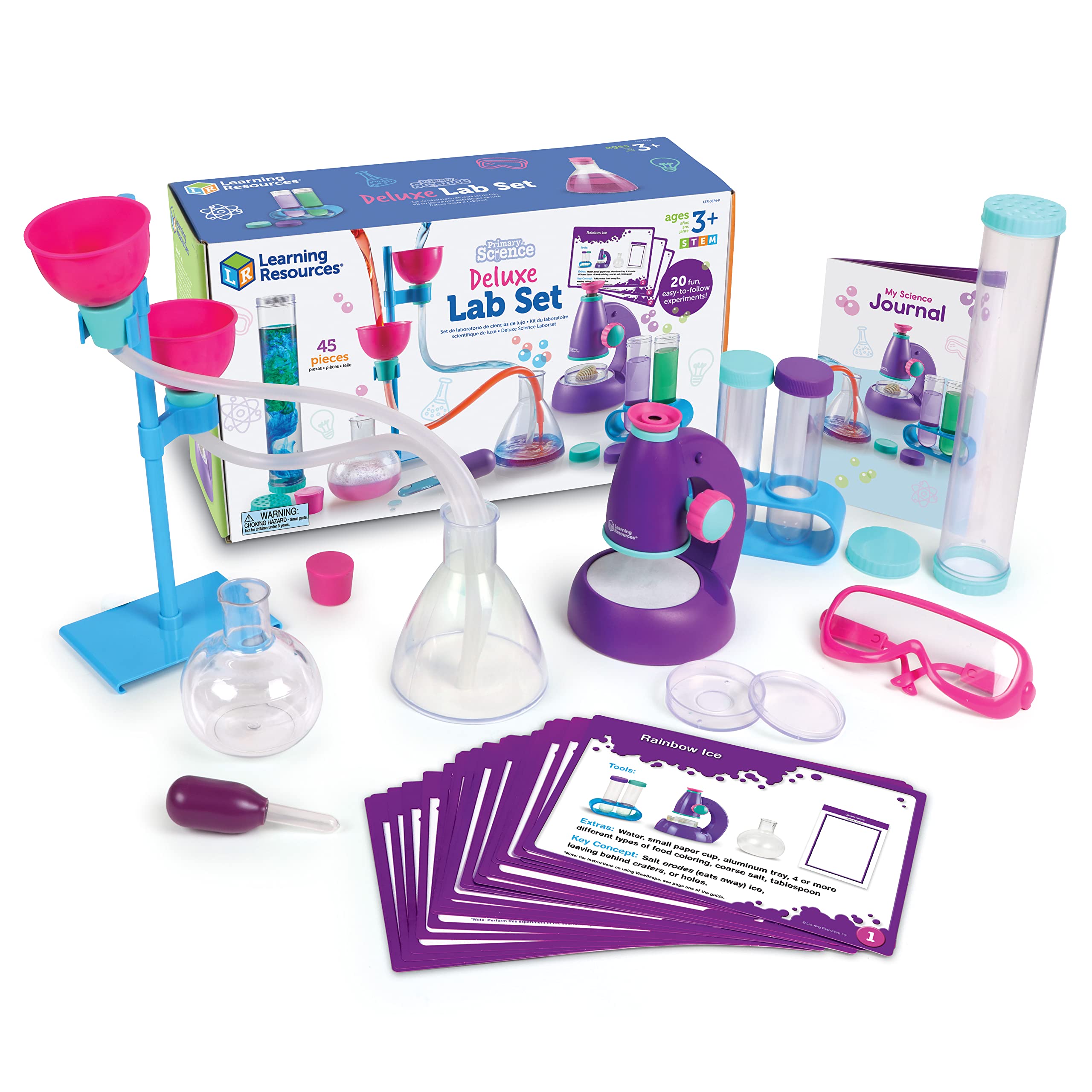
- Kids explore observation, experimentation, and other STEM principles with this 45-piece science kit.
- Comes with 20 step-by-step experiments using common household ingredients.
- Tools include a microscope, test tubes, and safety glasses.
Best For: Young children ready to try guided experiments with child-sized science tools.

Learning Resources Primary Science Lab Set
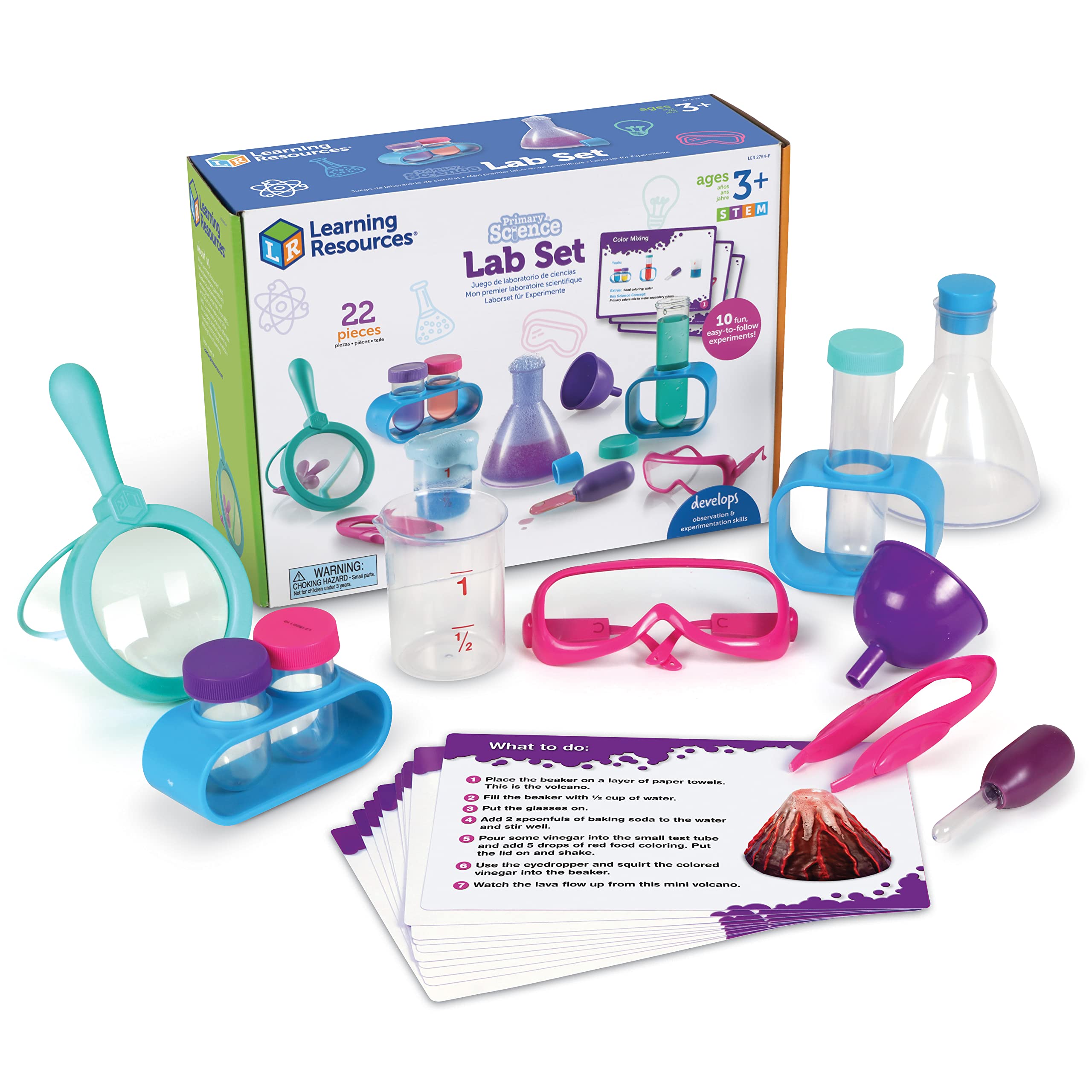
- Made for children ages three and up.
- Includes 22 pieces such as flasks, test tubes, and droppers.
- Activity cards guide children through experiments and descriptions of results.
Best For: Preschoolers who want to explore basic science tools through guided activities.
hand2mind Magnetic Science Kit
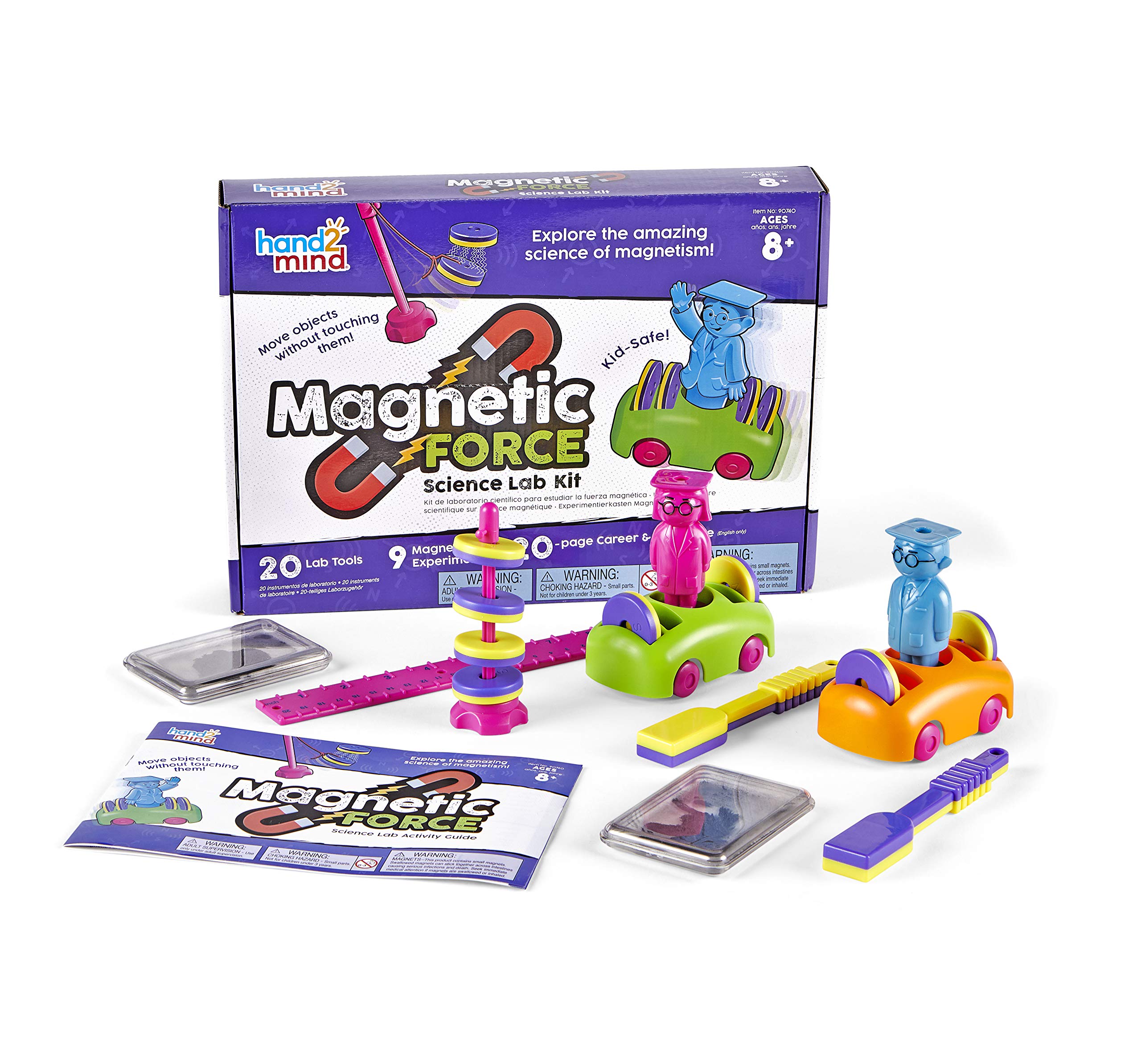
- Provides nine science experiments about magnetism.
- Activities include making magnets float and building a compass.
- Includes 20 lab tools and a 20-page fact-filled guide.
Best For: Children ages 8–12 interested in magnetism, levitation, and simple engineering ideas.
Learning Resources Super Magnet Lab Kit
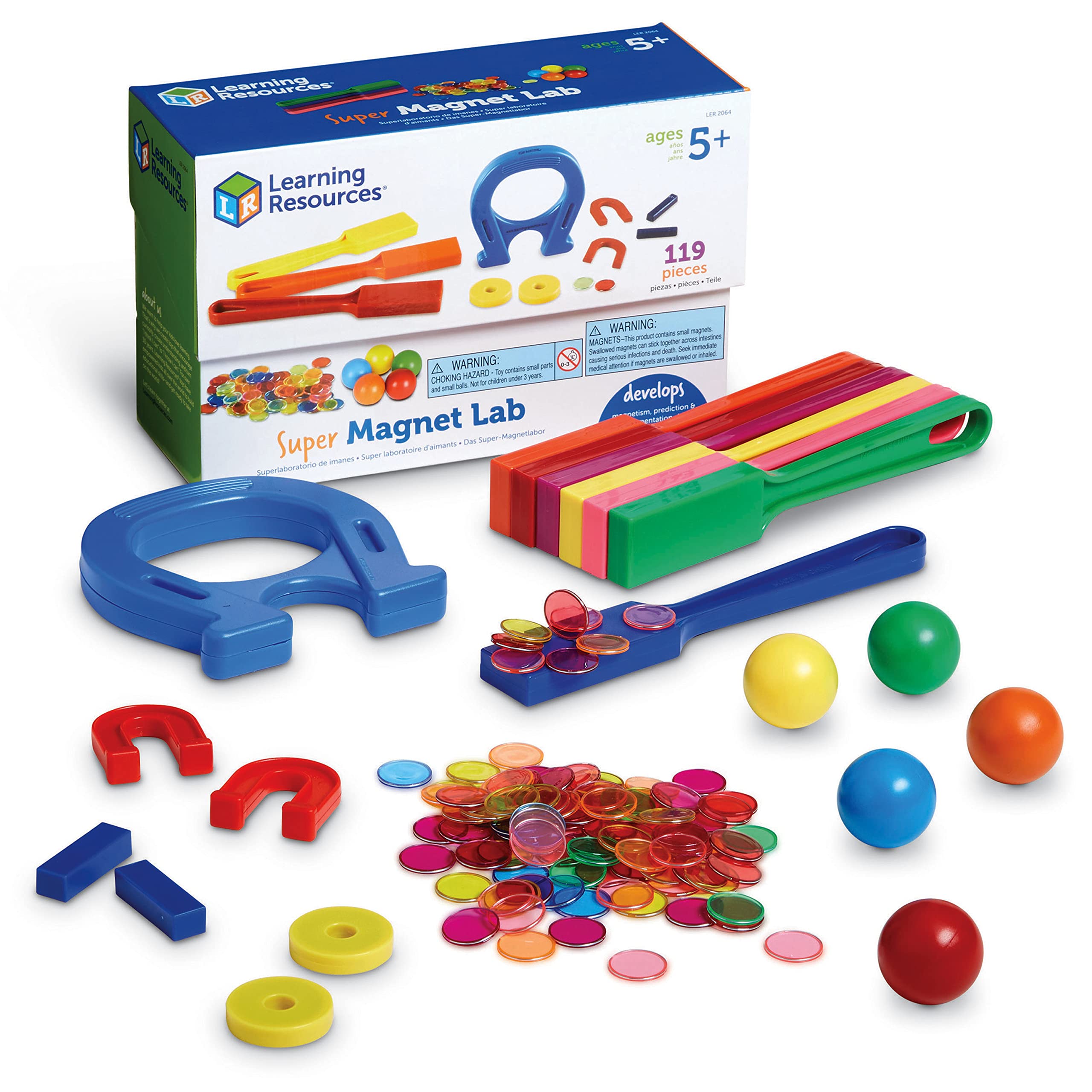
- A 119-piece magnetic discovery set.
- Includes magnetic chips, wands, marbles, and several magnet types.
- Includes a teacher’s guide and storage box.
Best For: Teachers, homeschoolers, or families who want many magnet components for shared exploration.
Dan&Darci Light-up Crystal Growing Kit
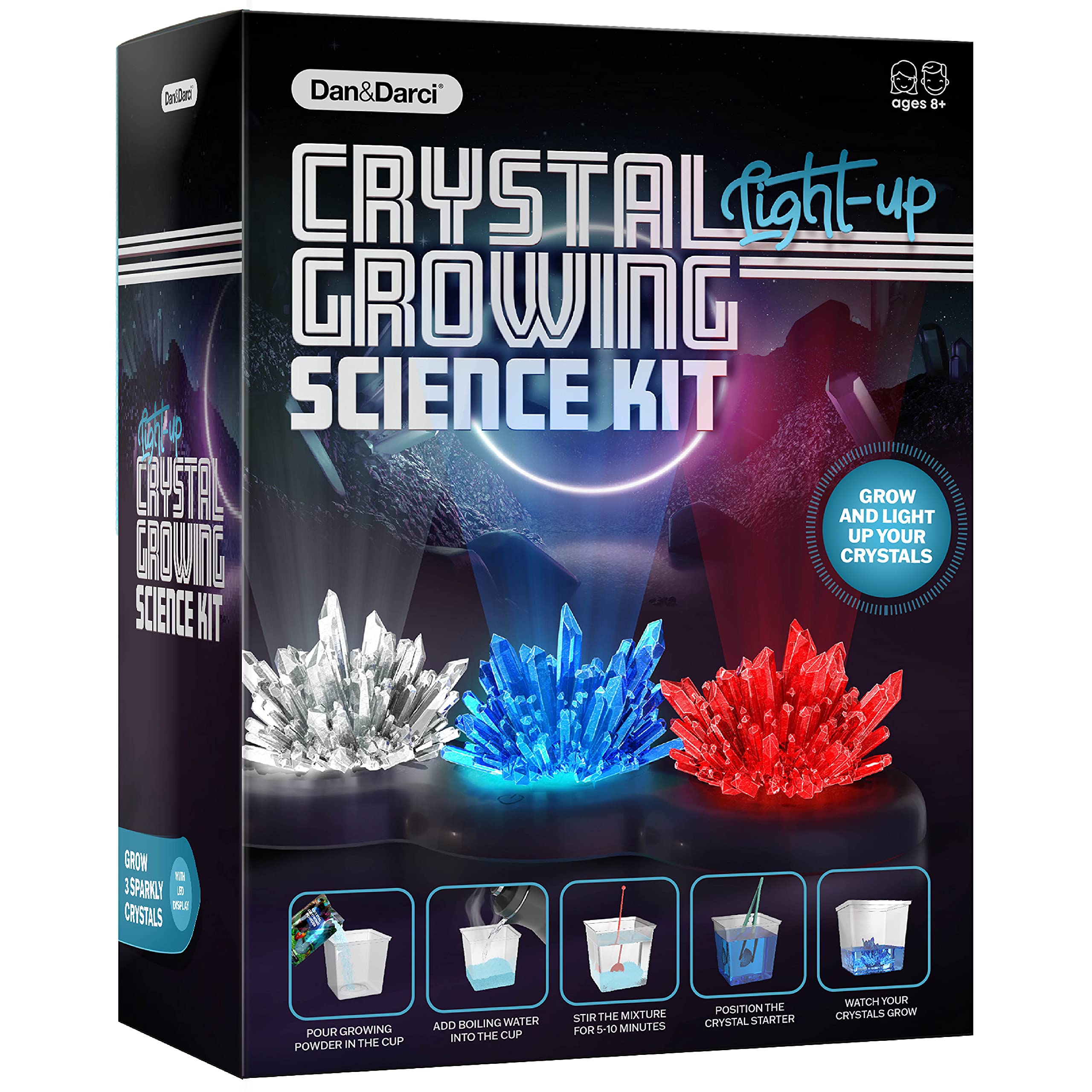
- Includes red, blue, and clear crystal powders.
- Provides three growing cups and crystal starters.
- Comes with an LED display and Micro-USB cable.
Best For: Children ages 8–12 who enjoy watching a project develop and displaying the result.
Dan&Darci Rock Collection for Kids
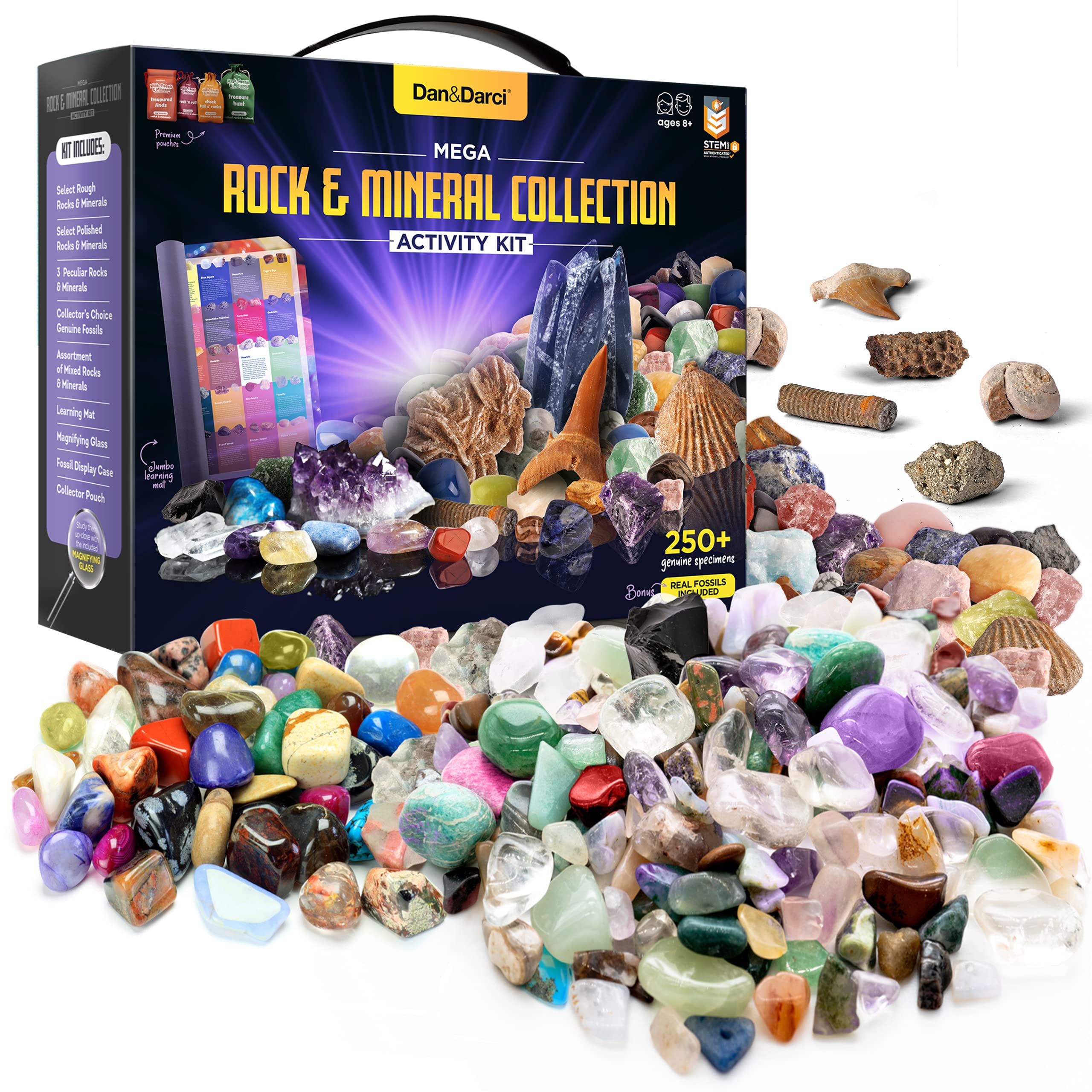
- Contains more than 250 rocks, minerals, crystals, and fossils.
- Includes a jumbo learning mat for comparing finds with pictures and learning facts.
- Comes with a magnifying glass, fossil display case, and pouch.
Best For: Young geology enthusiasts who like sorting, examining, and identifying specimens.
Educational Insights GeoSafari Ladybug Garden
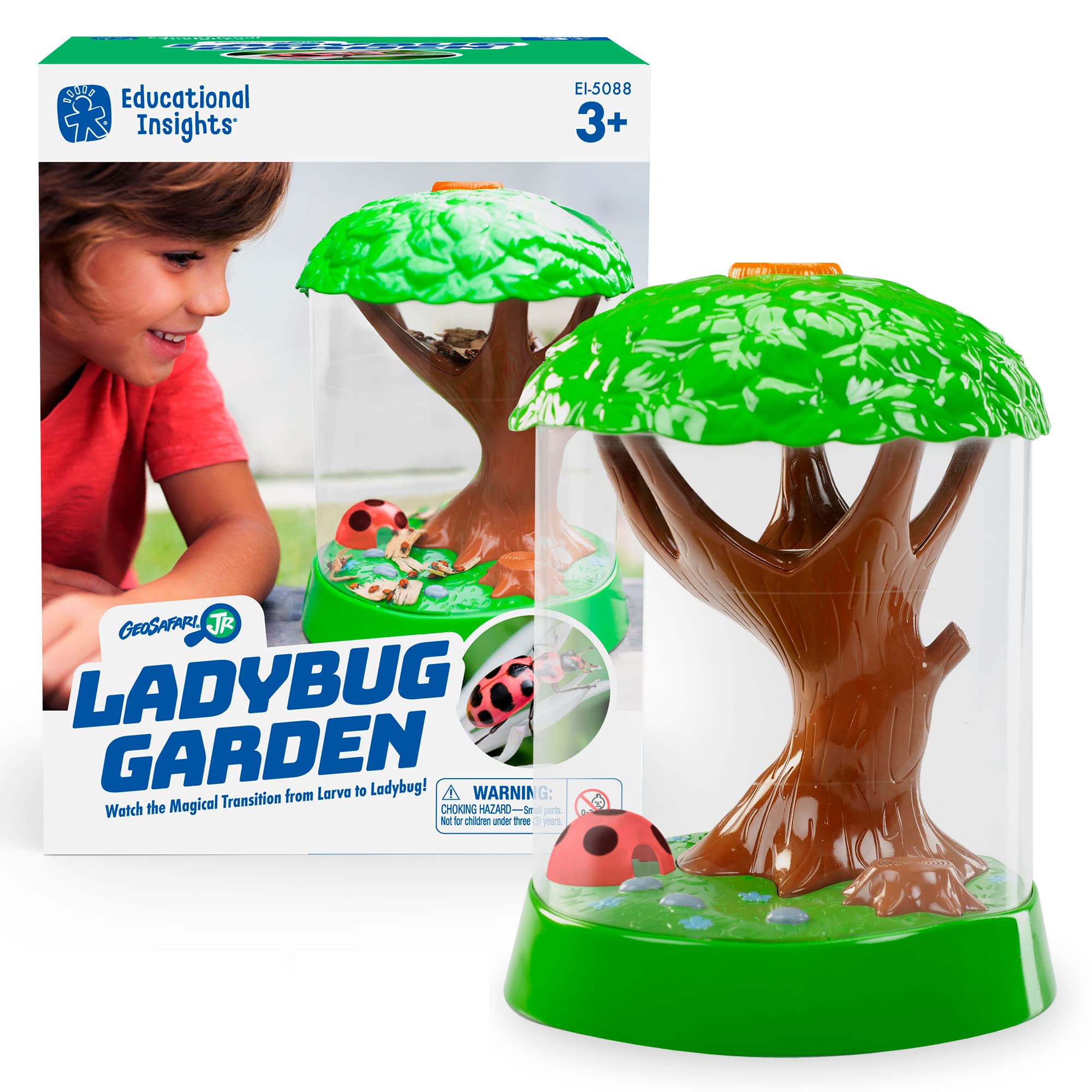
- Supports observation of the ladybug life cycle.
- Includes a reusable habitat with three magnification spots.
- A redemption card is included; larvae are shipped separately.
Best For: Children who want to observe the ladybug life cycle at home with adult help.
Learning Resources Human Body Model
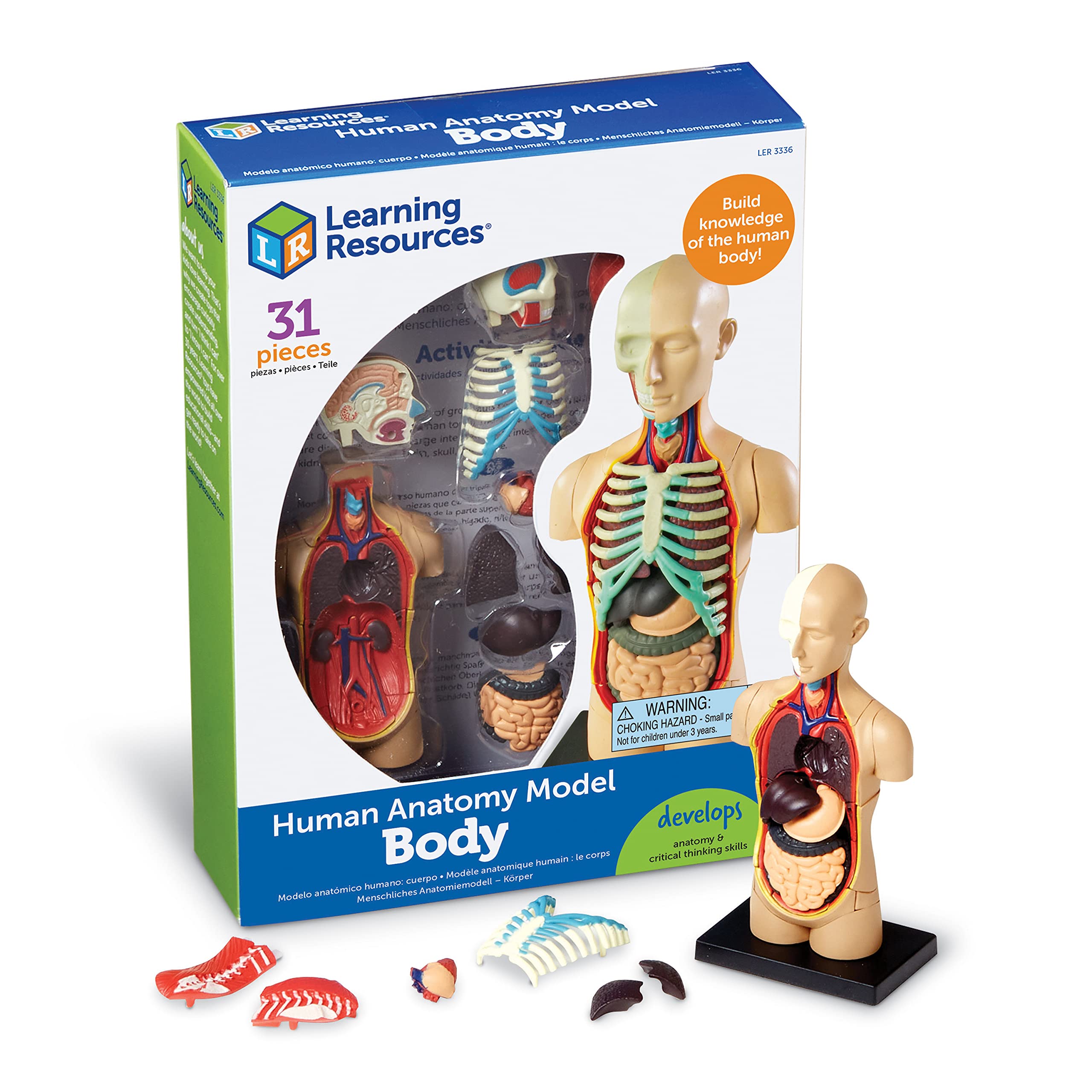
- Includes 31 pieces for a human torso model.
- Explores organs including the brain, heart, lungs, and stomach.
- Includes a fact guide and illustrated assembly instructions.
Best For: Children ready to assemble a compact model and learn the names and positions of major organs.
Dan&Darci Dig a Dozen Dino Egg Kit
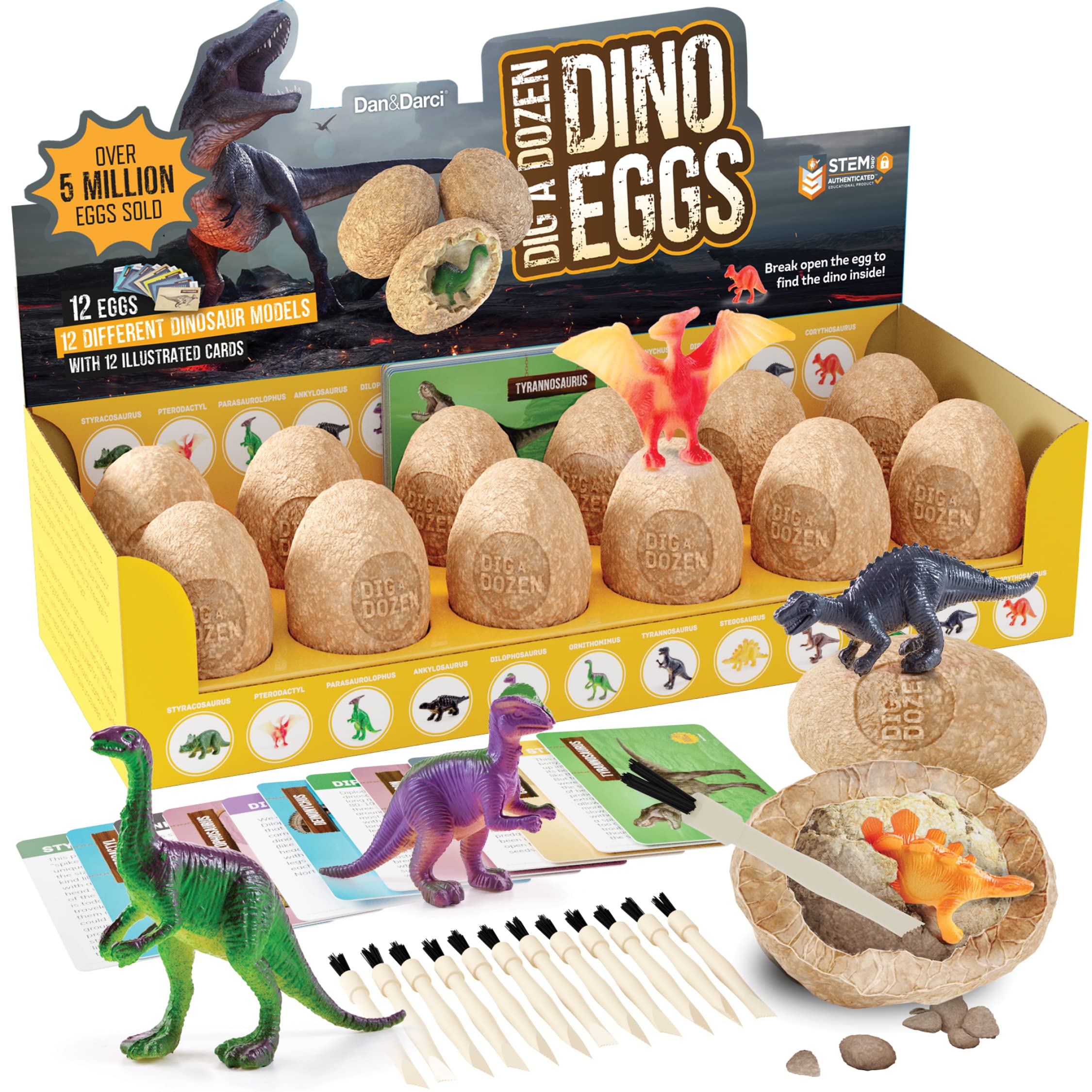
- Includes 12 eggs, each with a dinosaur model.
- Provides a chisel and brush for each egg.
- Includes 12 dinosaur learning cards.
Best For: Dinosaur fans who enjoy digging up toy dinosaurs and matching each find to a learning card.
Learning Resources Giant Inflatable Solar System
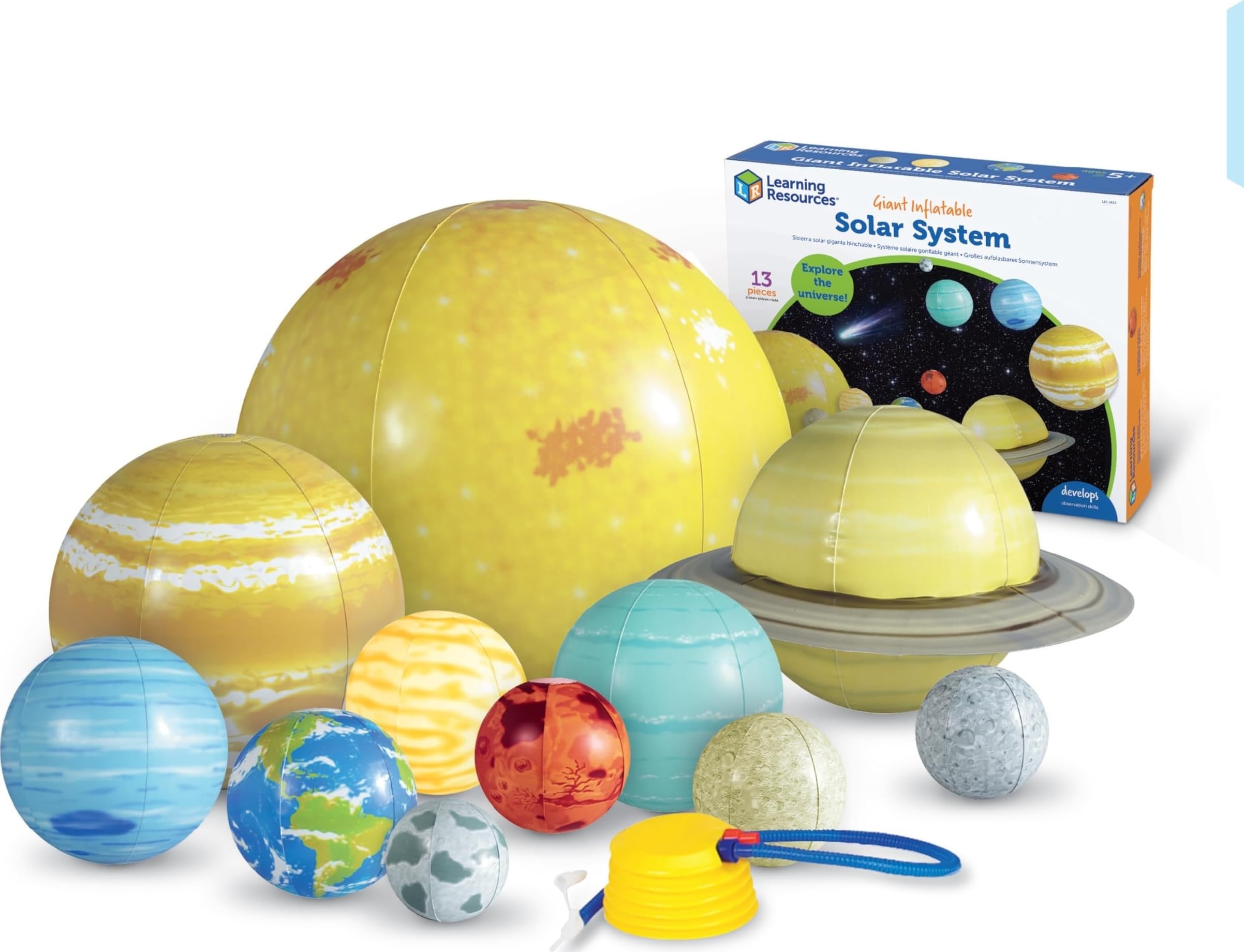
- Includes the planets, Pluto, the sun, and Earth’s moon.
- Includes a foot pump, repair patches, and activity guide.
- Planets range from five to 36 inches in diameter.
Best For: Families or teachers who want a large, visual astronomy aid for demonstrations and display.
Most Experiments for Young Learners
Learning Resources Primary Science Deluxe Lab Set - 45 Pieces, Ages 3+, Experiments for Kids, STEM Toys, Sensory Tube, Microscope for Students
This 45-piece set gives young learners a broad introduction to observing and experimenting. It includes a microscope, test tubes, safety glasses, and other tools sized for little hands.
The 20 step-by-step experiments use common household ingredients for activities such as mixing colors and making rainbow ice. That combination suits children who enjoy trying one activity after another with a grown-up nearby.
Its breadth is a plus for varied play, though families looking for a deep dive into one subject may prefer a focused magnet, crystal, or anatomy kit.
Best For: Young children ready to try guided experiments with child-sized science tools.
| Pros | Cons |
|---|---|
|
|
Choose this set for variety: it combines multiple tools with a sequence of guided activities, so children can move between observing and simple experiments. Its younger age focus makes it a more natural fit for introductory play than the magnet and anatomy kits aimed at older children.
Before buying, check which household ingredients the activities need and how much adult help the child will want. The supplied details do not identify the full experiment list.
Best Starter Lab for Preschoolers
Learning Resources Primary Science Lab Set Pink - Experimentation and Observation for Kids, STEM Projects, Science Kits, Experiments, Pretend Play Scientists, Toddler Project Chemistry Toy
Designed for ages three and up, this 22-piece lab set introduces early science through observation, prediction, and experimentation. Flasks, test tubes, droppers, tweezers, and a magnifying glass give children different ways to handle and inspect materials.
Ten double-sided activity cards guide experiments and encourage children to describe what they do and notice. It fits a home science corner or classroom station, especially when an adult can help set up activities.
This smaller set offers a focused introduction through its listed tools and activities.
Best For: Preschoolers who want to explore basic science tools through guided activities.
| Pros | Cons |
|---|---|
|
|
This is a practical starter choice for a younger child who benefits from simple tools and prompts for talking through an activity. Its 22 pieces and activity cards make the set more structured and compact than the larger deluxe lab kit.
Choose the deluxe version if a wider tool selection and more guided experiments matter more. Check the card instructions for the adult involvement and household materials you will need.
Best Guided Magnet Experiments
hand2mind Magnetic Science Kit for Kids 8-12, Kids Science Kit with Fact-Filled Guide, Make Magnets Float and Build a Compass, STEM Toys, 9 Science Experiments
This magnetism kit turns an abstract force into a set of things children can try. Its nine experiments include making magnets float, moving a train with magnetic levitation, and creating a compass.
The kit also includes 20 real lab tools and a colorful, fact-filled 20-page guide explaining scientific principles. That makes it a good fit for a child who prefers a clear sequence of activities over open-ended magnet play.
Families seeking a large classroom collection of varied magnets should compare it with the Learning Resources Super Magnet Lab Kit.
Best For: Children ages 8–12 interested in magnetism, levitation, and simple engineering ideas.
| Pros | Cons |
|---|---|
|
|
Choose this kit for guided activities focused on magnetism. It includes 9 experiments, 20 lab tools, and a fact-filled guide with scientific principles and information.
The activities include making magnets float, moving a train with magnetic levitation, and creating a compass. Check that the child is ready for the age range in the title and whether an adult will help with the experiments.
Best Classroom Magnet Collection
Learning Resources Super Magnet Lab Kit - 119 Pieces, Ages 5+, STEM ,Toys for Kindergartner, Science Learning Activities for Kids,Back to School Supplies,Teacher Supplies
This 119-piece set is built for hands-on exploration of magnetic properties. It includes magnetic chips, wands, marbles, and several forms of magnets, along with a Teacher’s Guide and storage box.
Activities let children explore which materials are magnetic and experiment with attraction and repulsion. The set is designed for up to 25 students in Grade 1 and up, making it suitable for classroom, homeschool, or home science activities.
Best For: Teachers, homeschoolers, or families who want many magnet components for shared exploration.
| Pros | Cons |
|---|---|
|
|
Choose this set when access to a range of magnetic pieces matters more than a tightly prescribed experiment sequence. Its teacher’s guide and group capacity suit classrooms or homeschool activities, while the storage box helps manage the collection.
For a child who wants a smaller, more directed series of magnet experiments, the hand2mind kit may be easier to navigate. Check that you have space to store and sort the many components.
Best Crystal Growing Display
Light-up Crystal Growing Kit for Kids - Science Kits for Kids Age 8-12 - 6 7 8 9 10 Year Old Boy Birthday Gifts - Gifts for Girls - STEM Toys for 7 Year Old Boys, Experiment Crafts for Age 10-12 Years
This kit combines a crystal-growing activity with an illuminated display. Children mix the included powders and starters in three growing cups, then follow a 12-page illustrated booklet describing how crystals form.
The kit includes red, blue, and clear crystal powders, along with a USB-powered LED display and Micro-USB cable for showing the finished crystals. It suits a child who enjoys a project that unfolds over time and ends with a keepsake.
The tradeoff is that it focuses on crystal growth rather than offering a variety of unrelated experiments.
Best For: Children ages 8–12 who enjoy watching a project develop and displaying the result.
| Pros | Cons |
|---|---|
|
|
Pick this for a child who is drawn to growing and displaying a single science project. The three colors, cups, and illustrated guide provide a clear crystal-focused activity, while the light-up base adds a display element.
It offers less subject variety than a multi-experiment lab set. Before buying, check the activity instructions for preparation and waiting time so the project fits the child’s expectations.
Best Rocks, Fossils, and Minerals Collection
Dan&Darci Rock Collection for Kids - Includes 250+ Bulk Rocks, Gemstones & Crystals + Genuine Fossils and Minerals - 2 Lbs. - Geology Earth Science STEM Toys Activity, Gifts for Boys & Girls Ages 6+
This geology set offers a large collection of rocks, minerals, crystals, and fossils for children to inspect and compare. It contains more than 250 pieces and includes a learning mat with pictures and facts, plus a magnifying glass, fossil display case, and collector’s pouch.
Unlike a kit built around a sequence of experiments, this one supports open-ended sorting and observation. It suits children who enjoy collecting natural specimens or returning to the same materials for repeated comparison.
The main consideration is that the activity depends on a child’s interest in examining and organizing a collection.
Best For: Young geology enthusiasts who like sorting, examining, and identifying specimens.
| Pros | Cons |
|---|---|
|
|
Choose this collection for a child who wants tangible specimens to sort and inspect, especially if geology already interests them. Its learning mat and magnifier support observation, while the pouch and display case offer ways to keep selected pieces.
A guided experiment kit is a better fit for children who want to follow steps and make something happen. Check the included identification materials and how the child will store the collection.
Best Live-Insect Observation Kit
Educational Insights GeoSafari Ladybug Garden - Ladybug House with Live Ladybugs, Bug Catching Kit, Terrarium Kit for Kids & Toddlers, Bugs for Kids, At Home STEM Bug Habitat for Boys & Girls Ages 3+
This reusable bug habitat gives children a way to observe ladybugs as they develop from larva to pupa to adult. It includes a plastic bug house with a screw-on lid, three built-in magnification spots, an activity guide, and a redemption card for ordering larvae.
The larvae ship separately, and additional terms and cost apply, so this is not a complete live-insect activity from the moment it is opened. Families should also check the shipping restriction: larvae cannot ship to Alaska or Hawaii.
It suits patient young nature observers who can follow the ordering and care steps with an adult.
Best For: Children who want to observe the ladybug life cycle at home with adult help.
| Pros | Cons |
|---|---|
|
|
This is the nature-focused choice for a child interested in observing a real life cycle rather than a one-session experiment. The reusable habitat and guide support ongoing observation, but the larvae are not included in the box and require a separate order.
Confirm that ordering is available for your location and review the care steps before choosing it. For immediate backyard exploration without live larvae, a bug-viewing container may be a simpler option.
Human Anatomy Model with Fact Guide
Learning Resources Human Body Model, Science Classroom Demonstration Tools, Realistic Human Anatomy Display, 31 Pieces, Grades 3+, Ages 8+
This 31-piece torso model gives children a hands-on way to explore major organs and their functions. The miniature plastic model includes a brain, skull, heart, lungs, liver, stomach, kidneys, intestines, and other parts, along with a fact guide and photo-illustrated assembly instructions.
It is a focused anatomy activity for children curious about the human body or studying basic biology. The model measures 4 1/2 inches in height when assembled, making it a compact display.
Best For: Children ready to assemble a compact model and learn the names and positions of major organs.
| Pros | Cons |
|---|---|
|
|
Choose this model for a child who wants to take apart and reassemble a representation of the torso while learning organ names. Its included guide gives the activity a clear study focus, but the small assembled size makes it less suitable for group viewing than larger classroom models.
It is also a subject-specific pick rather than a kit for repeated chemical or physical experiments. Check that the child is comfortable handling and assembling small model pieces.
Best Dinosaur Excavation Activity
Dan&Darci Dig a Dozen Dino Egg Kit for Kids - Basket Stuffers - Dinosaur Toys Gift 3-12 Year Old - 12 Eggs & Surprise Dinosaurs - Science STEM Activities - Boy Toy Party Gifts for Boys & Girls
This excavation set turns dinosaur learning into a hands-on digging activity. Children dig up 12 eggs, each containing a unique toy dinosaur, using the included chisel and brush.
Twelve illustrated learning cards describe the history and characteristics of different dinosaurs, giving children something to match with each discovery. The kit includes materials for individual play or a group activity, with the cards adding a matching step after each excavation.
It suits dinosaur enthusiasts who enjoy uncovering models and learning about dinosaurs.
Best For: Dinosaur fans who enjoy digging up toy dinosaurs and matching each find to a learning card.
| Pros | Cons |
|---|---|
|
|
Choose this activity when the child’s interest in dinosaurs is the main draw and a tactile project will hold attention. The 12 eggs create multiple small discoveries, and the matching cards add a learning step beyond simply collecting figures.
It is a narrower science experience than a lab set, and repeated digging is the central activity. Check whether the child will want adult help with the excavation and cleanup.
Best Large Solar System Display
Learning Resources Giant Inflatable Solar System - Project Kit, Space and Planet Model, Constellation Classroom Globe, STEM Science Projects Gifts, Preschool , Teacher Must Haves
This astronomy project set uses inflatable celestial bodies to make the solar system visible at room scale. It includes all eight planets, Pluto, the sun, Earth’s moon, a foot pump, repair patches, and an activity guide.
Hanging loops allow the planets to be mounted on a wall or ceiling, making the set useful for a classroom or a child’s room. The inflatable sizes range from five to 36 inches in diameter, so buyers should plan for inflation and display space.
It is a visual teaching aid more than a compact experiment kit.
Best For: Families or teachers who want a large, visual astronomy aid for demonstrations and display.
| Pros | Cons |
|---|---|
|
|
Pick this set for visual astronomy learning when there is room to inflate and display large planets. The hanging loops and activity guide make it more of a demonstration and display resource than a small tabletop experiment kit.
Consider whether the child wants to learn through visual scale and room setup, or would prefer repeated experiments with smaller materials. Check the available ceiling or wall space before buying.
How to Choose Science Kits For Kids
How We Picked Science Kits for Kids
We prioritized products that give children a clear way to explore a science subject through experiments, observation, excavation, or model assembly. The selection spans early lab tools, magnetism, crystal growth, geology, insect life cycles, dinosaurs, anatomy, and astronomy.
Each pick has a distinct activity or learning focus, so families can start with the child’s interests and age rather than treating every science kit as interchangeable.
Age guidance and setup details matter. Some choices are designed for children as young as three, while the magnet and crystal activities target older learners.
We also considered what arrives in the box: several kits include guides or cards, while the ladybug habitat requires a separate larvae order.
Comparing Science Kits for Kids
A general lab set offers the widest mix of tools and guided activities. The Primary Science Deluxe Lab Set includes 45 pieces and 20 experiments, while the smaller Primary Science Lab Set has 22 pieces and activity cards for younger learners.
For children drawn to one subject, the hand2mind kit gives magnetism a guided sequence, while the Super Magnet Lab has a larger assortment of components for open exploration or group use.
The remaining options vary by the kind of discovery they support. Crystal growing unfolds over time and ends with a lighted display.
The rock collection encourages sorting and specimen comparison. The ladybug habitat supports ongoing observation but requires a separate larvae order.
Anatomy models focus on learning body structures through assembly, while the dinosaur kit makes excavation the central activity. The inflatable solar system works best as a visual demonstration with room to display it.
| Product | Standout features | Best for |
|---|---|---|
| Learning Resources Primary Science Deluxe Lab SetCheck Price |
| Young children ready to try guided experiments with child-sized science tools. |
| Learning Resources Primary Science Lab SetCheck Price |
| Preschoolers who want to explore basic science tools through guided activities. |
| hand2mind Magnetic Science KitCheck Price |
| Children ages 8–12 interested in magnetism, levitation, and simple engineering ideas. |
| Learning Resources Super Magnet Lab KitCheck Price |
| Teachers, homeschoolers, or families who want many magnet components for shared exploration. |
| Dan&Darci Light-up Crystal Growing KitCheck Price |
| Children ages 8–12 who enjoy watching a project develop and displaying the result. |
| Dan&Darci Rock Collection for KidsCheck Price |
| Young geology enthusiasts who like sorting, examining, and identifying specimens. |
| Educational Insights GeoSafari Ladybug GardenCheck Price |
| Children who want to observe the ladybug life cycle at home with adult help. |
| Learning Resources Human Body ModelCheck Price |
| Children ready to assemble a compact model and learn the names and positions of major organs. |
| Dan&Darci Dig a Dozen Dino Egg KitCheck Price |
| Dinosaur fans who enjoy digging up toy dinosaurs and matching each find to a learning card. |
| Learning Resources Giant Inflatable Solar SystemCheck Price |
| Families or teachers who want a large, visual astronomy aid for demonstrations and display. |
Choosing a Kids’ Science Kit by Age and Setup
For preschool-age children, look for larger, easy-to-handle tools and a guide that gives an adult a simple activity to lead. The two Primary Science lab sets are aimed at ages three and up; the 22-piece set offers activity cards, while the deluxe version adds more tools and experiments.
A young nature enthusiast may prefer a magnifier-based observation activity, but the live ladybug option involves a separate order and ongoing care.
Older children may enjoy a more focused challenge. The magnetic kits introduce force through experiments and components, the crystal kit adds a growing period and later display, and the anatomy model calls for assembling small parts.
Choose an activity that matches the child’s patience and interest. Check ingredient needs, setup instructions, and any adult involvement before starting a project.
Matching Science Activities to a Child’s Interests
Interest often matters more than choosing the kit with the most pieces. A dinosaur fan may stay engaged with repeated digging and learning cards, while a geology enthusiast may prefer a varied specimen collection and magnifier.
Children curious about animals can observe a real insect life cycle with the ladybug habitat, provided the larvae can be ordered and cared for.
Consider how the finished activity fits your home. The crystal display and anatomy model need a place to keep the result, while the inflatable planets need room for setup and hanging.
A lab set or magnet kit is easier to revisit as a series of activities, though individual experiments may require household materials or adult assistance.
Who Should Buy Which Science Kit for Kids?
Choose a general lab set for a child who likes trying different guided activities, and the larger deluxe version when more tools and experiments are useful. Pick the hand2mind magnet kit for a child who wants structured magnet experiments; choose the Super Magnet Lab for shared exploration with a broad component collection.
For a strong subject interest, the crystal kit, rock collection, ladybug habitat, dinosaur excavation set, or human body model each provides a distinct path into science. The solar system set suits visual astronomy learning when a large display can fit.
Before ordering, match the age guidance to the child, confirm any separate supplies or live-animal shipping requirements, and consider whether an adult will take part.